
January 12, Group 5
Will Blevins: Chaos and Calm Inside the US Capitol
The inside of the Capitol is often bustling with not only senators and representatives running back and forth from votes but also average citizens who get to walk through the halls that create the laws we govern ourselves by. A couple of others and I got the experience of seeing that chaotic running to the floor alongside a senator as well as seeing the inside of the capitol without the thousands of tourists that flock through every day.
Swarmed
Disconnected from the capitol above ground, my group traversed to the Hart office building to connect with my former colleagues in the office of Senator Cory Booker. After a quick chat, someone told us that the Senator would be walking out of the office and we would get the chance to see him and get a quick picture. Senator Booker quickly engaged in conversation with us and to our surprise invited us to walk with him to the Senate floor for a vote. We then walked briskly to the Senate train in the basement and traveled to the Capitol. Walking out of the train car we were swarmed by reporters wanting to know Sen. Booker’s plans on the vote and thoughts on president-elect Trump’s cabinet picks.
Although this was an out-of-the-ordinary situation, the Senators, yes multiple, were in their element and perfectly navigated their way through the swarm of media up to the floor to vote. Fighting through the hundreds of reporters, we looked inside the floor of the Senate and witnessed history as Senators were voting on a bill. On the trek back to the Hart office building Booker again was trapped by reporters but masterfully answered questions while dodging others and quickly we made it back to the office where he again talked to us for several minutes about our careers and where we wanted to go in life.
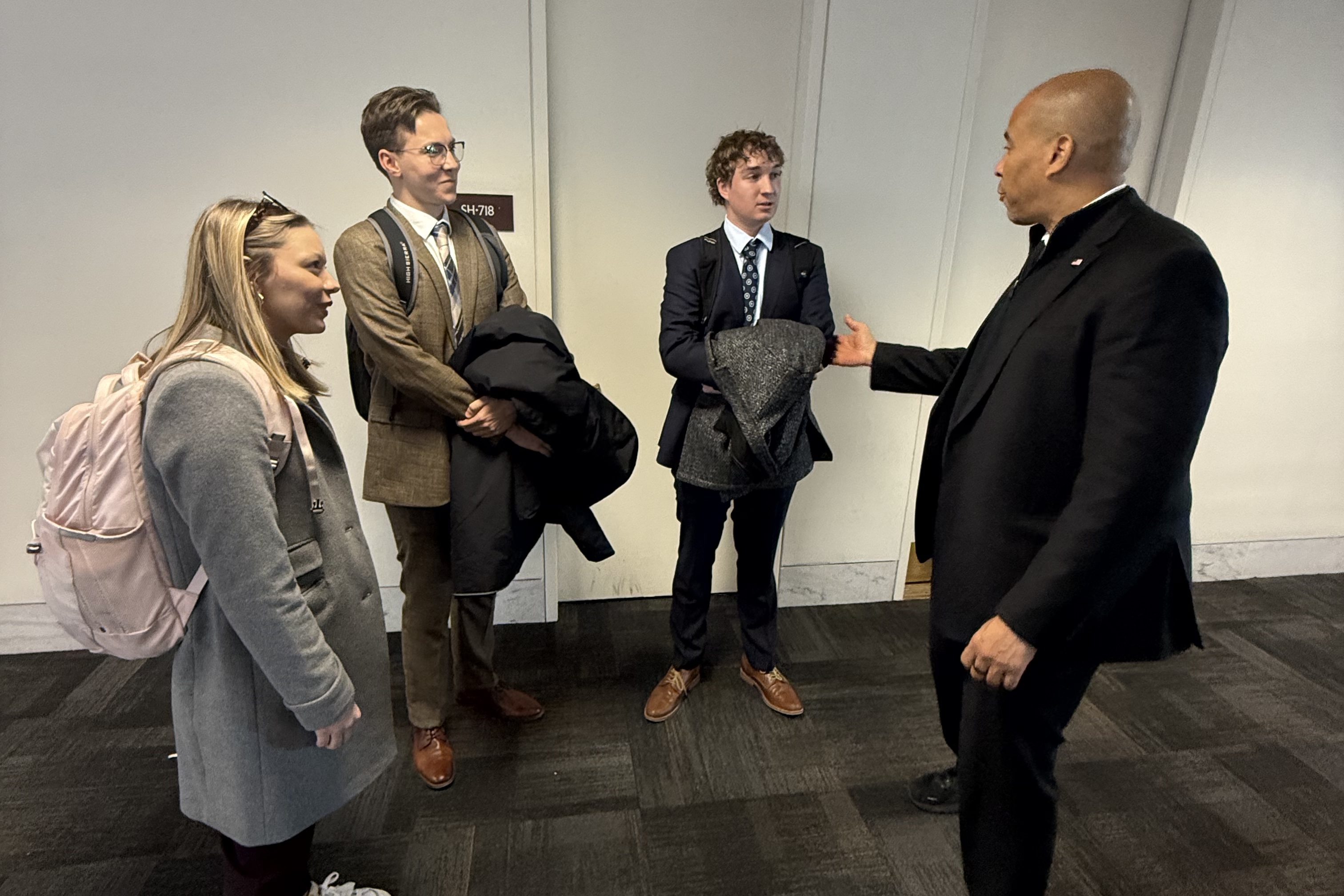
Above: Senator Cory Booker talking to Raya Hoppe, Michael Mitchell, and Will Blevins (left-right)
Alone
As said earlier, the US Capitol welcomes visitors from across the globe to experience American history and get a look at where the lawmaking process in the United States occurs. However, these tours are limited to certain areas in the capitol, so most visitors do not get to see all areas. Our Drake J term class got the special opportunity to visit the House of Representatives floor where not only debates between representatives occur, but where American traditions happen like certification of presidential elections and State of the Union addresses.
Sitting in the seats, I could only think about the names I have read about in history books as well as seen on the news that sit in these same chairs. Here there are fierce debates about the good for the country, but there are also personal and light-hearted conversations between representatives of differing parties about life and family. Seeing this room in person put it in perspective compared to the screens that I am used to seeing it on. It is a small room where elected officials no matter the political affiliation are working for the American people.
Continuing on our private tour we made our way into the rotunda of the Capitol. Often bustling with large groups of tourists, it was eerie with the room being empty. The echo enhanced the experience of knowing that days earlier we entered the space in mourning of the recently passed former president, Jimmy Carter.
Having a passion for politics and public service from a young age it was surreal to be inside the capitol and see the history hidden within its walls.
Future
Walking through the halls of the Capitol whether it be in the middle of day or the dead of night, there will always be a sense of pride and wonder about this US landmark. Experiencing both chaos and calm inside the halls brings fulfillment to me and continues to ignite the fire that I have built for a future in public service.
Will Blevins, American Politics and Strategic Political Communications Spring 2025, www.linkedin.com/in/will-blevins-7977ab212
Raya Hoppe: Beyond the Headlines: What You Can’t Learn about D.C. until You Visit by Raya Hoppe
Washington, D.C., is recognized nationwide as the Nation’s Capital, but there are some things you can only learn by visiting yourself. Beyond the city’s politics, history, and media portrayal, I’ve had the opportunity to catch a glimpse of the unique way of life in D.C.
The Unspoken Rules of D.C.
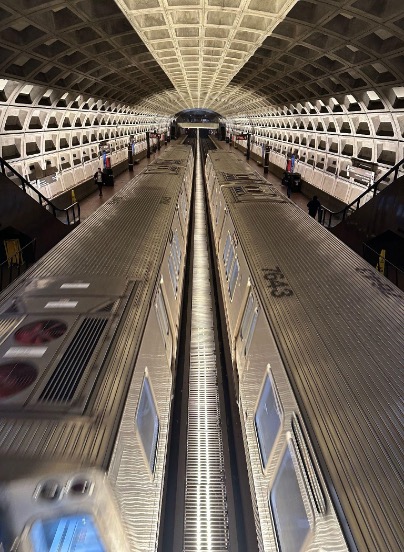
The D.C. Metro is the way to get around the city, it’s clean and surprisingly efficient, it makes it easy to access different neighborhoods and attractions. However, it comes with several unspoken rules starting with escalator etiquette. Here’s the deal: always stand on the right. The left side is reserved for people in a hurry and trust me, there are always people in a hurry. Block the left, and you’ll quickly become the target of some annoyed side-eyes or worse, an impatient “excuse me.” Everyone seems to be heading somewhere important, and there’s an expectation that you’ll respect the unspoken systems that keep the city moving.
How are you? vs. What do you do for work?
A couple of days ago, our class got the opportunity to meet with an alumnus who moved from a job in the Midwest to work in Washington, D.C. He shared his experiences of adjusting to life, and one comment in particular struck me: “The difference between the Midwest and D.C. is “’How are you?’ versus ‘What do you do for work?’” This helped me internalize the significant cultural differences between what I consider home and what I envision as a dream job location. When someone asks, “How are you?” It’s more than a polite formality; it’s an opportunity to connect on a personal level, show care, and build relationships. The emphasis is on who you are as a person, not just on your professional accomplishments.
In D.C. on the other hand, it’s a whole different ball game. The first question isn’t about how you’re feeling or what’s going on in your life, it’s about your job. Your job in the city is so often a significant part of your identity. On this trip, we’ve often heard the job market referred to as a “rat race.” The city moves at a pace, the Midwest could never imagine. In Washington, people are hustling—and they expect you to be hustling too, it’s a city that revolves around careers. If I had to take away one thing from our trip right now, it is that networking and the value of your connections often opens or closes doors for your career. D.C. is a city that teaches you the importance of work, ambition, and professional connections.
Ordinary D.C Residents
The fast-paced environment, constant networking, and career-focused conversations can make it feel like the city revolves around politics 24/7. Beneath the surface of suits and policy debates, D.C. is filled with people who have nothing to do with politics. The city is home to small business owners who built neighborhood coffee shops, bakeries, and boutiques, creating spaces where locals gather to enjoy a break from the chaos. Some teachers dedicate their lives to shaping the next generation miles away from the halls of Congress. Bookstore workers curate shelves with stories that help readers escape, offering narratives that go far beyond the political drama playing out just down the road.
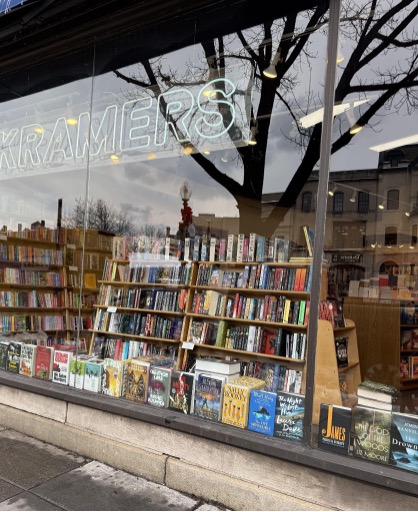
These people’s presence adds a balance to a city often defined by its work culture. They remind you that not everyone is here for a lobbying firm, a congressional office, or a think tank. Many are here simply to live their lives and contribute to their community in meaningful ways.
This quieter, non-political side of D.C. often flies under the radar, but it’s a crucial part of what makes the city so vibrant. Experiencing this side of the city is a reminder that D.C. isn’t just a hub of power, it’s also a community of diverse individuals who make the city what it is.
Chloe Gayer: A Tale of Two January 6ths
For the last year, I have spent every Sunday morning in the pews of a Church. So, during my time in Washington DC, I wanted to spend my Sundays the same exact way. This morning, I found myself attending not one, but two services at the Washington National Cathedral.
Both offered the same sermon and readings, but they couldn’t have felt more different. The 8:00 AM service was intimate and quiet. As the sunrise filtered through the stained glass, it reminded me of a smaller version of my Church back home. There was no music, no grand processions, just a pastor speaking to a small group of 15ish people.
By contrast the 11:15 service was a full production. The beats of the band’s drum and the harmonies of the choir soared through the cathedral, filling the stone building with a beauty that was almost overwhelming. Everything was perfectly choreographed and scripted, well except for a singular hymn. As someone unfamiliar with traditional services, the event seemed more like a grand gesture rather than a worship experience.
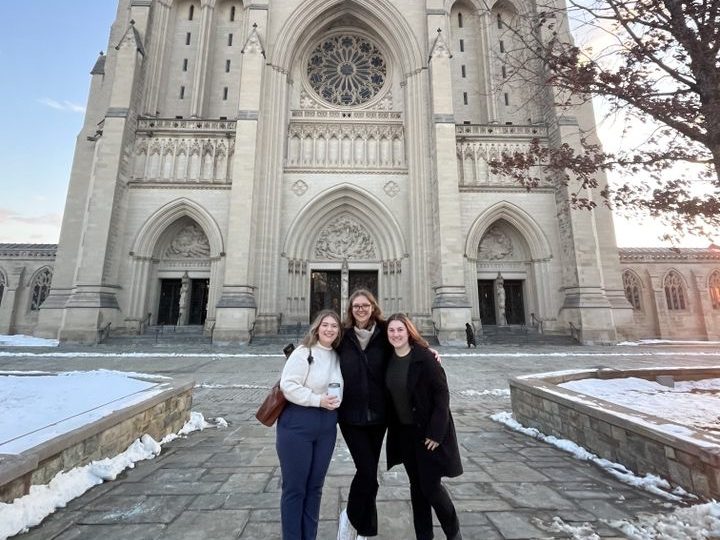
On this Sunday, we celebrated the Baptism of Jesus Christ by John the Baptist. In baptism, we declare who we are and who we belong to. We find that we are not alone, for God is always with us and we are always with each other.
After the Baptism of a little baby named Charlotte, the presider asked us to renew our covenant through a series of questions.
Will you seek and serve Christ in all persons, loving your neighbor as yourself?
I will, with God’s help.
Will you strive for justice and peace among all people, and respect the dignity of every human being?
I will, with God’s help.
While the vocal responses to these questions were scripted, the emotional ones were not. Those questions challenge us to live out our faith, to love without barriers, and to see every person as one Jesus died for, because He did.
I don’t think it is a coincidence that the same Sunday we celebrated the Baptism of the Lord, we also celebrated the Feast of Epiphany. Taking place on January 6 of each year, Epiphany commemorates the Magi’s journey to honor the infant Jesus, recognizing Him as the Savior of the world. Just as the dove broke through the heavens, the star guided the way to revelation and hope.
But for most Americans, the date January 6th does not bring to mind the story of the Magi. Instead it is a reminder of the insurrection that took place only a few miles away from where I worshiped this morning. While Epiphany calls us to unity and peace, that day was one characterized by anger, division, and violence.
I can’t remember the exact date of my own personal epiphany, the moment I accepted the Lord as my Savior. But I remember every detail of January 6, 2021. I remember leaving my virtual class early because of an email from CNN. I remember watching the television and hearing the shouts of the crowds, all in disbelief.
On that day we saw what happens when division takes over. The violence at the Capitol was fueled by people who lost sight of unity. Epiphany, on the other hand, is fueled by something greater. Something so large as the reminder that we belong to God, not to political parties or ideologies.
In the first chapter of 1 Corinthians, Paul begs us to remember our unity. He asks questions, just as I was asked this morning.
“Was Christ divided?”
“Was Paul crucified for you”
“Were you baptized in the name of Paul?”
Paul asked the Corinthians to decide. Do they belong to division or do they belong to the Lord? And if we are all baptized in Christ, then we are called to love one another, even when it is hard.
This message feels especially important as we approach another presidential inauguration. Since the 20th century, inaugurations have included moments of prayer and reflection. They remind us of something bigger, something eternal. As we look ahead, I am holding on to the hope that Paul speaks of. Division may be easy, but unity is what we are called to.
Chloe Gayer is a senior at Drake University, studying American Politics with a passion for advocacy and community organizing. Born and raised in Iowa, she is committed to fostering unity and understanding through her work to reflect her belief in the power of people to create meaningful change.
Entry 1: January 7 – 9, 2025
Group 1
A Modern City
Washington D.C. is a modern city in the full sense of the phrase. Public transportation spans from city edge to city edge; shiny buildings stretch for miles across the Potomac marshes; and professional people stroll about with the weight of the political world upon their shoulders.
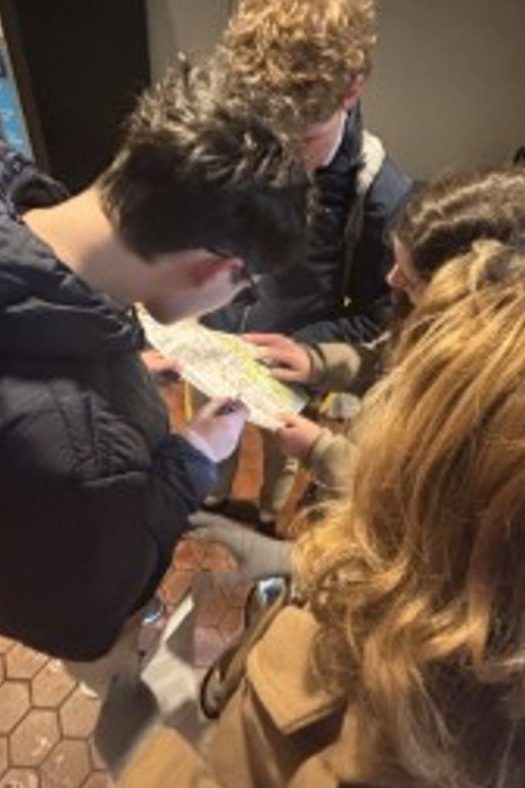
With a modern city, a modern navigational method is a requirement. Despite the expectations, five lowly midwestern collegiates traversed without modern amenities, all the while engaging and enjoying the city as it was intended — looking up and around instead of down at a phone.
The day started with viewing former President Jimmy Carter lie in state under the Capitol Rotunda. As fitting with our overall theme, no phones were allowed once within the viewing area of the Rotunda. As a group, we viewed, paid our respects and stood in awestruck silence as Members of Congress (Rep. Tom Cole R-OK), a Supreme Court Justice (Sotomayor) and others came to pay their respect to the late President. As a group, we not only witnessed an intimate moment between members of the most elite class of Americans, but one of the last remaining moments for both common Americans and elected Representatives to come together in one room to pay their respects to a leader all can find something to admire about. We even witnessed a changing of the guard. A once in a lifetime experience that may never be matched in any of our lives, all before 10 a.m. We thank the AP for being our photographers on this somber day.
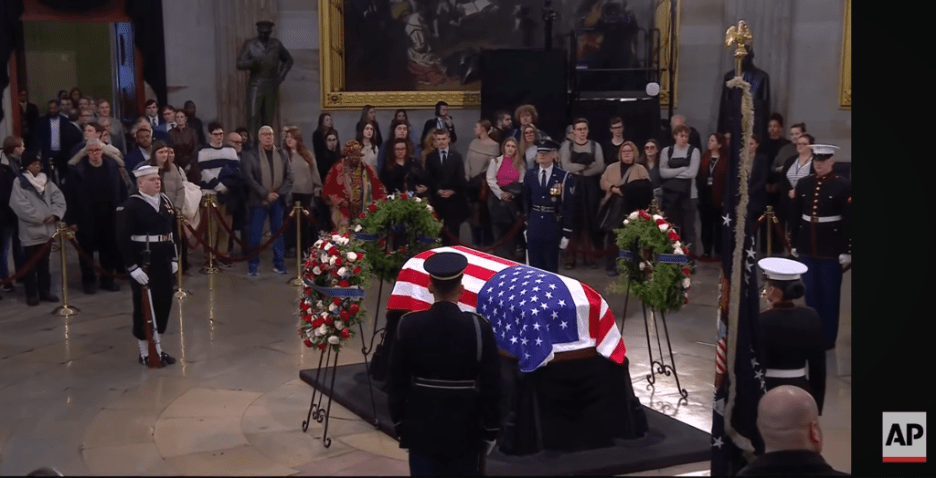
The Eastern Market was our first stop on our whirlwind journey through the city. We walked multiple blocks and dreamt up our futures in these multi-million dollar homes. Through slush and ice we made it to the quaint Eastern Market. Bookstores, cafés, and restaurants offering cuisine from every corner of the world were there. While we didn’t warm up in any of these restaurants or stores, it offered great views of the Capitol which allowed us to better orient ourselves before getting on the Metro.
Up next was the Smithsonian Castle, where museum employee Liz was making the most of the snow and ice. Armed with skis, she tread down the National Mall. Liz wasn’t the only one making the most of the snow — little snowmen dotted the National Mall.
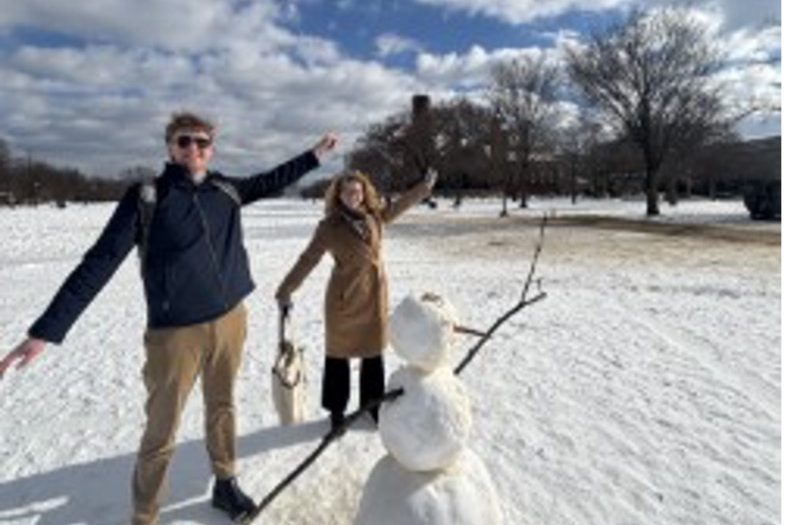
While there, we got to witness the Capitol being set up for the inauguration. We visited where we will be witnessing history in less than two short weeks.
A tinny tree, a spindly spider and a lot of unidentifiable yet evocative sculptures live in the National Gallery of Art Sculpture Garden. We had a lot of fun looking at the various snow-covered sculptures in person as we passed through on our way to the Metro stop.
As soon as we stepped off the Metro station in Chinatown, it felt like we were in a whole new city. Streets were lined with banners and Chinese characters while smells of the upcoming cuisine wafted through the air. Stepping into the slush, we were greeted by the Chinatown Friendship Archway. It stretched toward the sky, welcoming everyone to Chinatown with its bright colors.
Our first stop was Reren, a restaurant on 7th St. NW featuring whopping bowls of lamen and plates of chicken. It was just what our tired feet and empty stomachs needed.
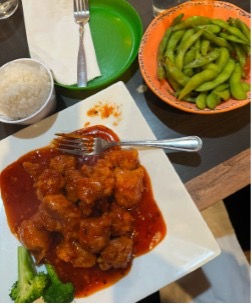

After we filled our stomachs and rested our legs, we set off to find the Mary E. Surratt Boarding House. After walking back and forth to find the house, we realized that the old boarding house is now a Wok and Roll — a karaoke restaurant just East of the Chinatown Friendship Archway with the best name in all of D.C.
The lesson learned during this adventure was that despite all of the recommendations we got, the best place was the one we stumbled upon out of pure hunger. D.C has an abundance of options, too many options, sometimes making it difficult to choose anything. Our advice: pick the place that catches your eye – and your nose!
Japanese-American memorial
The path to the Japanese-American memorial was comparable to ice skating with stilettos. In a city where snow becomes a major headline in the news, our midwestern privilege was showing (that privilege being fully plowed streets and sidewalks). While the walk was less than ideal, the memorial was truly breathtaking. The memorial itself blocks out the rest of the city once you step inside. It tells a story as you walk clockwise through the exhibit, telling the story of the thousands of Japanese Americans’ reality during World War II. The exhibit is a short trek from Union Station, which should be high on the list of places to at least take a peek at.
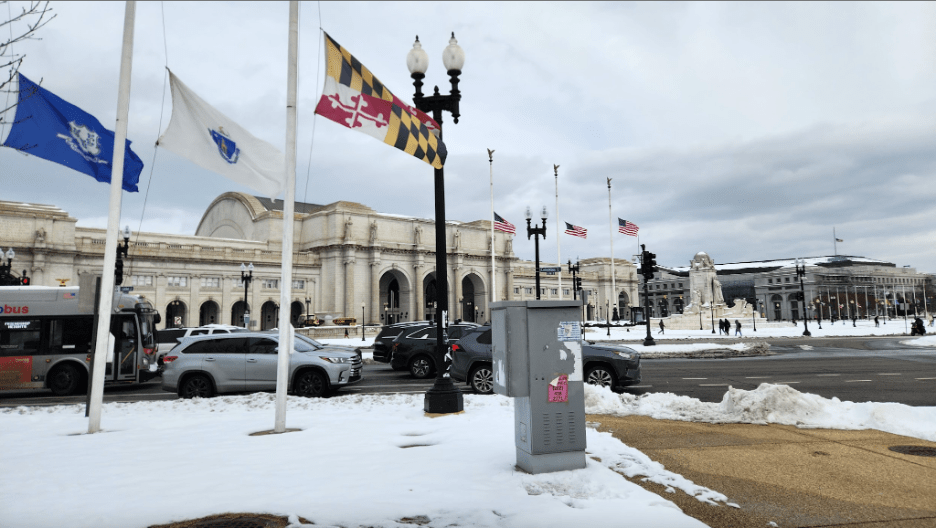
St John’s church
Earlier in the day, at Eastern Market, a subway traveler had told us semi-confidently that St. John’s Church was located “somewhere in Georgetown, just get off at Foggy Bottom.” Thankfully, we decided to double check that on the map.
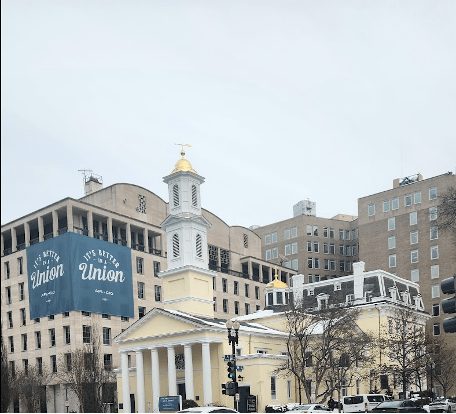
St. John’s Church stands, in fact, in Lafayette Square — right across from the White House. Pale yellow with golden domes, the National Historic Landmark has served area Episcopaleans for two centuries. After snapping some pictures, we strolled back to the Metro to head to our next stop.
Admiring the shelves and neighborhood of DuPont Circle
At the landmark bookstore, we decided to bring some Bulldog energy to the scene.
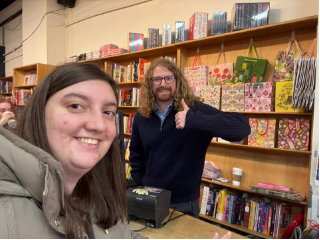
The Kramer employees (one pictured here) also gave us helpful and personal advice as to what to see (the Spy Museum) and where to eat (the Green Zone) in DC.
Mapping our adventures:
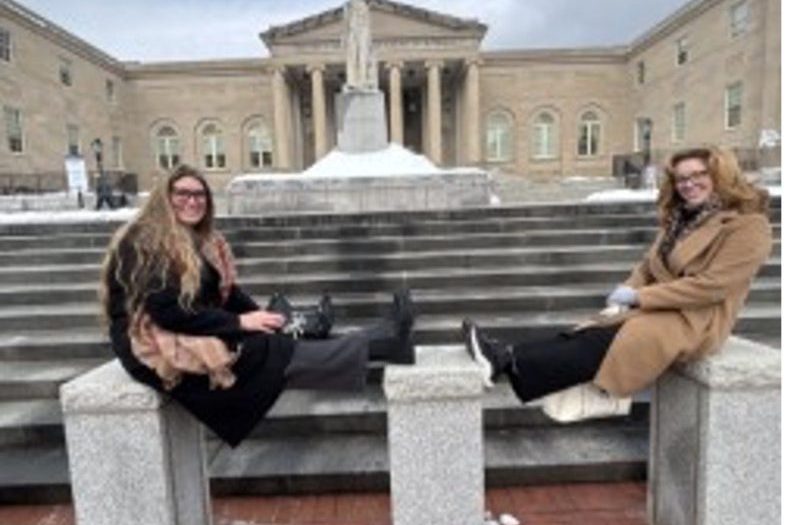
Hanging out in front of the D.C. Court of Appeals!
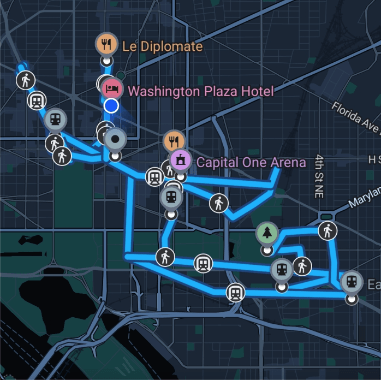
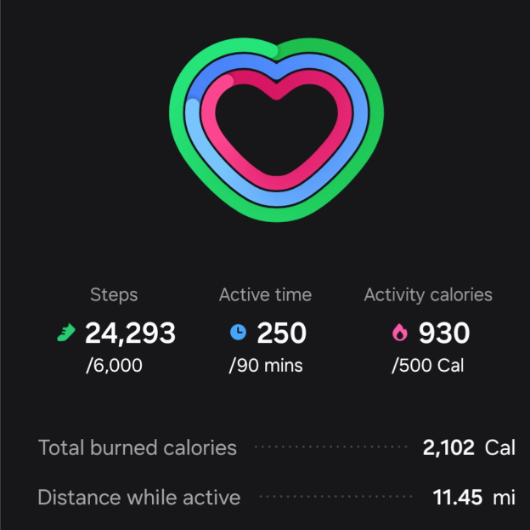
One group member’s phone counted over 24,000 steps and over 11 miles on the day. A light day’s work!
Wandering DC with a purpose may be the best way to experience such a city so rich in historical and cultural sites and sounds. While we had destinations that were the ultimate goal, the in-betweens were some of the best experiences. There are no wrong directions in a city full of opportunity. Day One of Washington D.C. was a success!
Group 2
Exploring D.C.
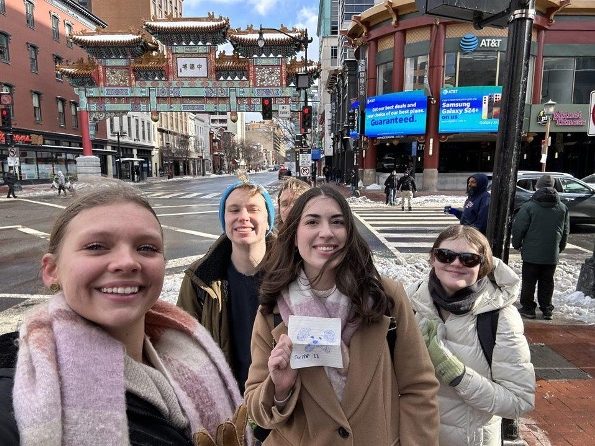
Madi, Sam, Torin, Nora, and Morgan!
To start our first full day in Washington D.C., our J-Term class was split off into small groups. Our groups were tasked with going around the city without using our phones to find different landmarks, and fun places around D.C. while engaging with the culture around us. Our group was interested in finding out why people are where they are? How did they end up in the place where they live or work, and why do they choose to stay? As we explored our new surroundings, we asked some local residents to try and get answers to these questions.
We started our day at the Capitol where – after seeing President Jimmy Carter lying in state – we were able to talk to an NPR Photographer. She saw us planning out our route for this hunt, and struck up a conversation with us. As we got to get to know her, she said she originally moved to D.C. for a job with the Washington Post. While sharing her story with us, she said that she had started doing more freelance work, and enjoys the freedom the city brings for work opportunities.
After our short conversation, we went on to begin the scavenger hunt. We started out by using the map which by the end of the day was folded in ten different places, and torn to shreds by the 20 mph winds. And with that map we located the Memorial to Japanese American Patriotism, which was the closest thing on the list to where we’d started at the Capitol Building. We also made our way over to Chinatown, to see the Friendship gate that went over the streets there. The main method of travel we’d take throughout the day to get from place to place was the metro system, a series of trains that run underground. Most of the day was spent between walking to our stops, and hopping back on the train to get to the next location on our hunt!
For the next stop on our search, our group got to go to a local bookstore: Kramers. There, we talked to a few employees about their experiences in the city. All three of the employees we spoke to do not live in D.C. but commute for work. One pointed out to us that “D.C. is a city of commuters.” When asked what changes they noticed in D.C. surrounding an inauguration, they said that the city is constantly busy. They have noticed how D.C. is always in motion, people are coming and going. But they enjoyed that chaos and liked having such an active place around them.
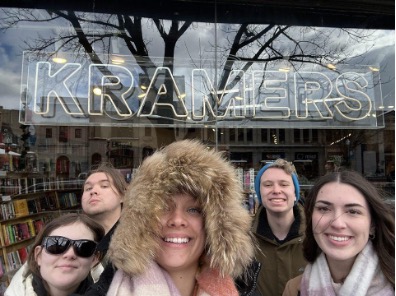
As we got out of the Eastern Market metro station stop, we came upon Sophia and Mirabel who were kind enough to take the time out of their day to chat with us. They were the first people we interviewed who were born in D.C. They said that they enjoyed growing up in D.C. and remembered spending their childhoods at museums, landmarks, and festivals. When we asked about the upcoming inauguration, they told us that there was more tension and division in the city during the last Trump administration. They also spoke about their experiences of living in D.C. during the January 6 insurrection attempt in 2021 and the long-term impact on the city.
To bring a piece of home (Drake) with us everywhere we traveled throughout the day, we created a “Flat Griff.” This way we could bring our favorite bulldog with us as we scurried around the city!
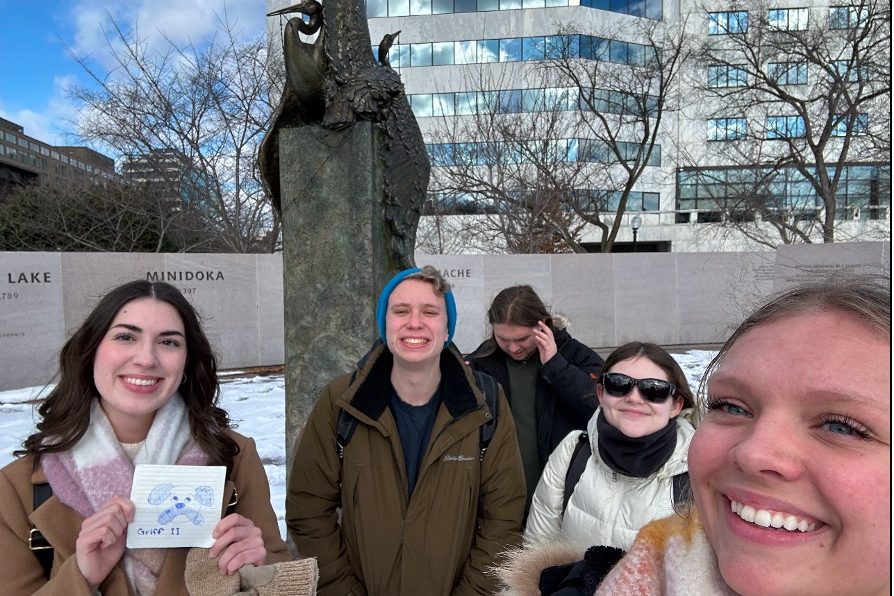
Overall, our first day was about embracing all of the chaos and culture of the city we are going to call home for the next two weeks. We ran all around the city, saw some amazing landmarks, and talked to people who are proud to call this city home. These next two weeks are going to be hectic, busy, and full of surprises.
Group 3
The Heart of the Nation Beats For Its People
By: Miguel Abellan, Cassie Contrereas Franco, Fran Conner, Mitch Davis, and Michael Mitchell.
Washington, D.C. is known for its history, monuments, and political power internationally, but what makes this city truly special is the people who live there. Throughout our time exploring the city and talking to locals and visitors, the common theme that they shared about this city was its strong community. Throughout our day in the city we interacted with three residents of Washington, D.C.: Mauna, Jacqueline, and a pair of work travelers on Lafayette Square. These three individuals all had different yet similar inputs when asking them questions about the city. The most common theme between these three people was their love for the diversity of this city.
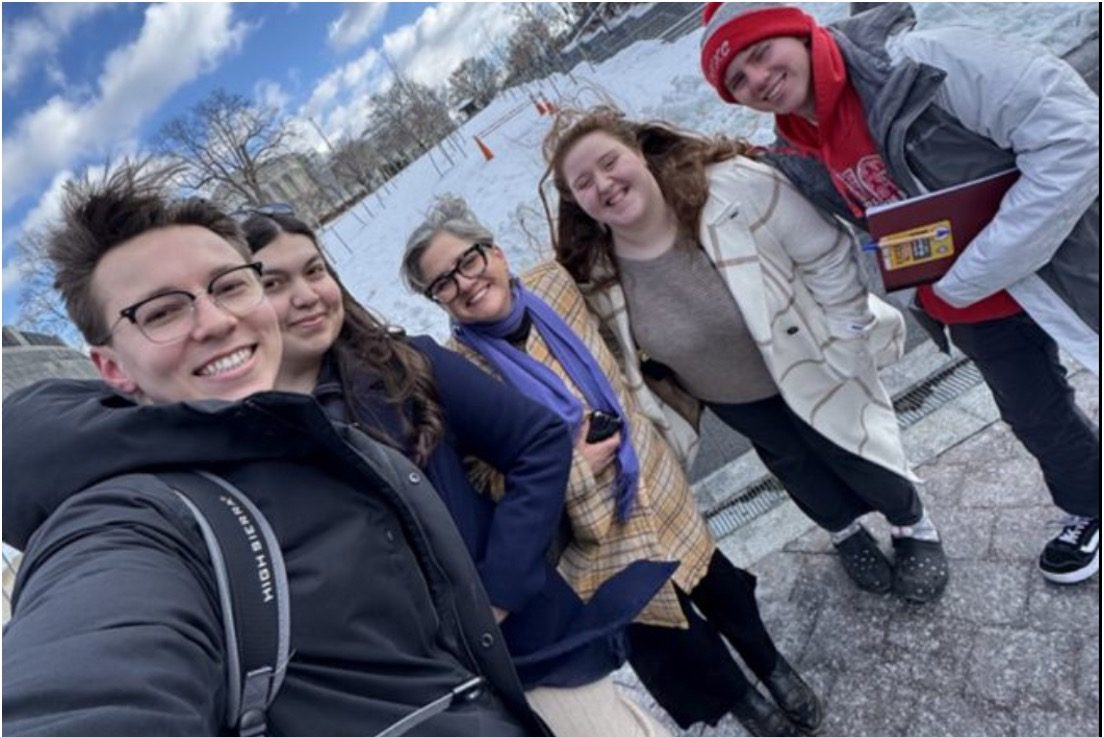
Meet Mauna (in center of image above): A friendly and eccentric local who has lived in the D.C. area her entire life; besides her time in Chicago, Illinois, for her bachelor’s degree. We met Mauna immediately after visiting the recently deceased, former U.S. President Jimmy Carter’s state funeral, an event uniquely open to all walks of life.
Mauna embodied the heart and spirit of Washington D.C. that she loves, allowing a stranger to quickly feel at home by her warm and welcoming personality. What started as a simple “hi” on a bench quickly became a hospitable introduction into her life and her dedication to enriching her community. During her extensive time in D.C, Mauna has volunteered on political campaigns, worked in aerospace data software, served as a United flight attendant, and is now a high school teacher and a part time tutor for math and science.
Outside of her occupations, it has always been important to Mauna to help those in need, specifically focusing on blood donations as a way to give back to her community. She identified that she has been giving blood since the age of 16 because she has type O- blood, also known as the universal donor. Interestingly, this philanthropic element of her lifestyle unfortunately lined up perfectly with the January 6th insurrection. Mauna highlights that around 2 weeks before January 6th, she heard multiple warnings online and on the radio to work that something bad was going to happen on this day, and to avoid downtown during this time at all costs. She had orchestrated a school blood drive to occur near downtown on this day, and she thought it would not have been a problem. At this appointment, Mauna discovered that she was no longer eligible to donate blood because she received a bovine bone graft for her tooth. While this may not seem extreme to some people, blood donation played a pivotal role in her ability to give back to her community, and introduce other people into a community space. In addition to her new loss of identity, she drove home watching the city she grew up in implode.
She knew something bad was going to happen, but she along with millions of other Americans could not predict the severity of the events that took place. Mauna says the only thing she could focus on was the police’s inability to contain the situation, pondering if their handling would be different if the majority of perpetrators were not white. Her contemplation of these identities ultimately exemplified the nature of the city; one in which there is a genuine passion for the safety and well being of those around them, a goal that cannot be accomplished without the effort and dedication of the entire community.
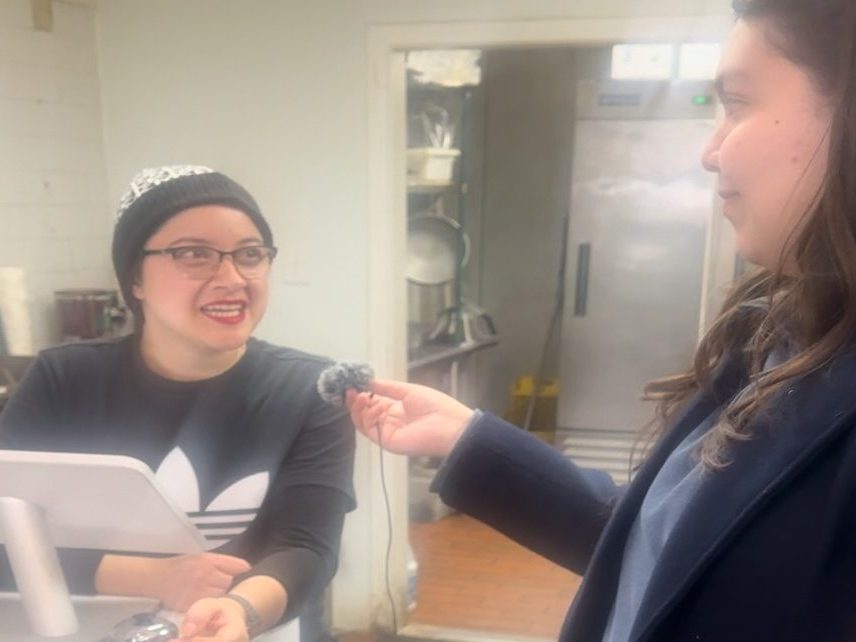
Meet Jacqueline (above): In our search to explore some of Washington DC’s iconic landmarks and neighborhoods, we stumbled upon a local restaurant named “Cafe Tortilla.” Our group decided to dine in and try a new Salvadorian restaurant in the Eastern Market area. Once we walked in we saw a wide range of people from many different types of backgrounds. That is one of Jacqueline’s favorite parts of the city, a welcoming and friendly restaurant worker who took our order. She mentioned that she thinks DC is a beautiful place where they are welcoming to all types of people. She explained that this reflects in the restaurant since many of the people who come and eat there have never tried Salvadorian food and her customers are from diverse backgrounds.
One of her favorite parts of the job is when people who have never tried Salvadorian cuisine ask her questions about the menu and they order it and enjoy it. She says it is always nice to see them return and it reiterates the welcoming atmosphere to many different types of cultures. I believe that our group learned a lot about the city from eating at this restaurant since we saw the diverse people speaking different languages, different ages, and different experiences.
The restaurant also had a wide variety of items on the menu from different cultures, such as “Pupusas” which are the most popular item on the menu, native to El Salvador. They had Fajitas and Burritos which originated from the “Tex-Mex” food culture. Meeting Jacqueline helped us gain a better understanding of what the DC residents think of the city and what keeps them here.
The last two people we spoke to were a man and a woman waiting for an Uber on Lafayette Square. The man, who did most of the talking, had been born in D.C., at Walter Reed. He said they were in the city for work, an assertion supported by the ID badges they wore on lanyards. When we met them, they were sightseeing. The man said that he liked the city because it was “the nation’s capital” and one could find people from many different backgrounds. At the time, the White House was obscured from the north side; his companion thought this might have been because Joe Biden was not feeling well. After sharing a chuckle, we moved on.
Later, we walked by a homeless man who was asking passersby for money. I (Mitch) fumbled for my wallet in the cold and handed him a five. Fran opened her purse to look for a bill, but couldn’t find one in the right amount. She offered to buy the man something he needed. He asked for a beer, and Fran explained that she could not buy him one. The conversation ended after that.
So, while D.C. is the “company town” for government, its population is much more diverse than government functionaries. The city accommodates not only senators and staffers, but also science tutors, hostesses, and those who don’t have employment at all.
Group 4
Trekking Through the District
By Elijah Alsop, Hannah Goldsmith, Eve Loehrer, Erin Nicklas, Pat McCabe
After paying our respects to 39th President Jimmy Carter in the United States Capitol Rotunda, our group made our way to the hill’s Le Bon Cafe. The location provided us with an opportunity to plan our route and activities for the day. We planned on visiting a number of locations throughout the city, with the requirement that we return by 3:30 pm. Inside the cafe was a unique and bustling environment, with a variety of patrons enjoying coffee and small meals. Some individuals inside conducted themselves quite professionally, discussing political activities while dressed in formal attire. Others were much more casual in their dress and demeanor, calmly going through the steps of their day. Such a tone serves as a microcosm of our day in the city. While Washington D.C. may be the center of our nation’s political activities, politics do not define the district as a whole.
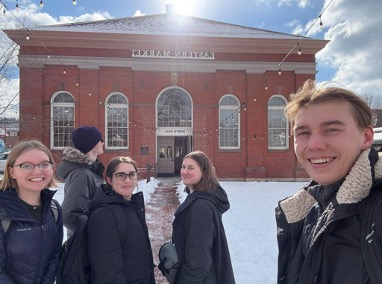
As we walked up to the Eastern Market, a sudden screech of tires sounded. We looked across the street to see a car stuck in the snow. An older couple pushed the car from the back to no avail. Elijah darted across the street followed by the heroic Pat McCabe to assist. We heaved and heaved until the car was free. I was expecting the couple to get into the car; instead, they walked away holding hands. They too were complete strangers to the man in the car. The common discourse of Washington, D.C. is that it is full of backstabbing, scheming politicians and lobbyists willing to pull anyone down to get ahead. That was stuck in my mind as I believed us midwesterners to be the only ones willing to help a stranger stuck in the muck. However, the District is more than just Washington. Our journey through the city today and the people we met proved that the community is very strong.
We finally reached the Eastern Market, but after we entered, the room was mostly empty and desolate. A man in a cowboy hat and flannel walked across the room and after letting us know we weren’t in the wrong place, we struck up a conversation about the place. He told us about the shows that he puts on for kids filled with music and puppets. The surrounding blocks are mostly residential so the room fills with the kids from the community. After telling us the history of the Eastern Market, he told us that he wouldn’t be much help navigating downtown. Although he had lived in the area his whole life, he hadn’t started visiting the sites until he had grandkids to show them to. His community was The District, not Washington.
The man’s name is Jim, and he does puppet shows for kids under the name Kidsinger Jim. He publishes photos and demos of his songs on his website, childrensmusic.com.
After a short ride on the metro, we arrived at the Smithsonian metro station. Upon reaching the top of the escalator out of the station, we were met by a man wearing a gray sweatshirt with the Salvation Army logo, who introduced himself as Michael. He seemed friendly, offering us a map of the surrounding area. We asked him if he could point us in the direction of the Smithsonian Castle, and he explained that the castle was closed for renovations, but he was able to tell us where to go. Michael also told us how to get to the other nearby museums, as well as gave us a recommendation for a nearby food hall.
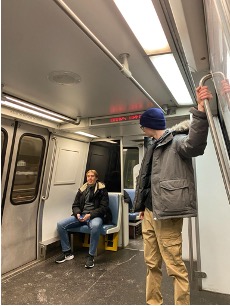
Michael then told us that he was out there as a volunteer with the Salvation Army. He said that the maps he was handing out were free, but asked if we had some spare cash that we could donate. He explained that he would normally just stand by the Salvation Army kettle and collect money that way. Unfortunately, he is not allowed to have the kettle out there. He said he didn’t really understand why he wasn’t allowed to have the kettle, but he explained the challenges that this presented. With the kettle, he told us that people can scan a QR code to donate online, which many people prefer to do since less people carry cash with them. He said that this was leading to a decrease in donations, which he attributed to the COVID-19 pandemic.
Michael is an example of the D.C. community that we encountered; a community that, contrary to popular media portrayals, isn’t entirely centered around politics. The work that Michael does is an example of how regular people in the district take time out of their day to help those in the community around them.
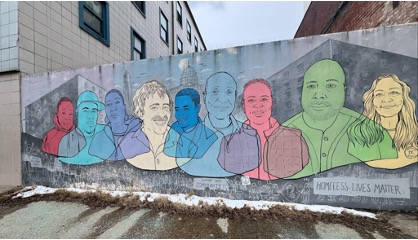
Our cold trek through the snow was put into perspective almost immediately after, when we ran into a Navy veteran. He approached us like a salesman, and his pitch was this: he had learned he qualified for vouchers, and needed to come to DC and stay in a shelter for the night to get them. The shelters he had gone to all had a waitlist, so he had spent the previous night outside. He was trying to get enough money ($79) to spend the night in a motel in Maryland instead of in the cold. He reported a different picture of the community in DC than we had previously seen, he had been outside for hours and most people had walked by him like he was invisible. He told us he only needed $20 more, and considering how miserable walking through the snow had just been, we did not want to see someone spending the night outside, and one of us handed him a $20 bill.
The group also ended up giving him some contact information we thought would be helpful and estimating how long his metro ride to meet his bus would take. He thanked us more for stopping and treating him like a person than he did for the money or anything else we helped him with. This does not reflect the strong sense of community we had observed earlier in the day. I think that the general public may be more willing to help with a task like pushing a car than to do something like give money to or even acknowledge someone who is homeless. This is perhaps because homelessness is a much more wide-scale issue seen every day in DC and communities around the world while getting a car out of a snowbank is a simple fix.
Whatever the reason, it was interesting to observe how there is a culture of helping people out in only some scenarios. We are not innocent either; I think everyone in the group has walked straight past someone experiencing homelessness at least once on the trip. While issues of homelessness and housing can be political, the veteran we met had nothing political to say to us and just appreciated being talked to like a person. Regardless of ideology or if you have $20 to spare, you can always acknowledge someone’s existence.
After a successful morning of sightseeing and meaningful conversations with D.C. locals, we took the red line over to Chinatown. Feeling good about our ability to visit all of the destinations before the 3:30 deadline, our group chose to find a spot to eat in the neighborhood.
Once exiting the metro to a still-blue sky, we found the Chinatown Friendship Arch with ease. After a brief walk in the wrong direction, we stumbled upon the Mary E. Surratt Boarding House, where conspirators plotted Abraham Lincoln’s assassination. The only sign of the building’s past is a plaque outside detailing its history. Today, the building serves as a karaoke bar and a Chinese restaurant, which is where we decided to eat lunch.
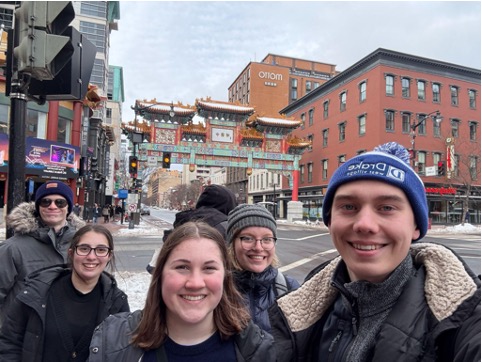
After a delicious meal, we emerged from the restaurant to a gray-clouded sky and blistering winds. After another quick trip down the red line, we began the grueling fifteen-minute walk to the Memorial to Japanese American Patriotism. As we moved further east, the sidewalks became increasingly slush-covered and the air temperature seemed to fall. Just before the memorial, Eve looked down to make sure she avoided the worst of the ice, but was met with a horrifying sight: a large dead, or possibly still dying, city rat. It was so large that she didn’t realize it wasn’t a squirrel until later.
Just as this rat was dying (dead?), so was the possibility of us getting to all of the destinations before 3:30. Between our lengthy conversation with Jim, our sidequests, and the trek to and from the memorial, we didn’t get back to the metro station until after 3. We soon realized that not only would we be struggling to make it to Kramer’s at Dupont Circle and St. John Church in time to make it to the meeting, but we would be struggling to make it to the meeting on time regardless.
Despite the dreary ending to our day, we had a great morning talking with locals about their lives in the political capital of the nation, which, despite what some may think, did not center around politics.
Group 5
The Times They Are A-Changin’: Perspectives of D.C. Residents on the Inauguration and Trump’s Second Term”
As we began the day without technology, we ran into several business owners who were doing their everyday jobs. At our first stop we grabbed lunch as well as chatted with the cashier at Bullfrog Bagels in Eastern Market. The cashier, friendly but reserved, politely declined our interview request, explaining her hesitancy to discuss the upcoming inauguration and its impact on their business.
After a quick walk to the market in the neighborhood, we again asked some employees at a deli counter how the inauguration affects their lives and business. Again, they declined to talk to us, as the employees were focused on unpacking a large delivery, and while they declined to talk due to being busy, it was clear that the demands of running a small business left little time for reflection which is valid. Finally, we crossed the street to Capitol Hill Books for one last chance to find a small business employee to talk to. Here, we spoke with a new hire. She explained that she wasn’t yet familiar with the store’s operations to comment on how the inauguration might affect business.

These interactions taught us the challenges of engaging with local businesses during moments of national significance. While the people we met were polite and welcoming, their hesitancy to discuss the topic highlighted the intersection of personal boundaries, business priorities, and the complexities of living and working in the Capitol.
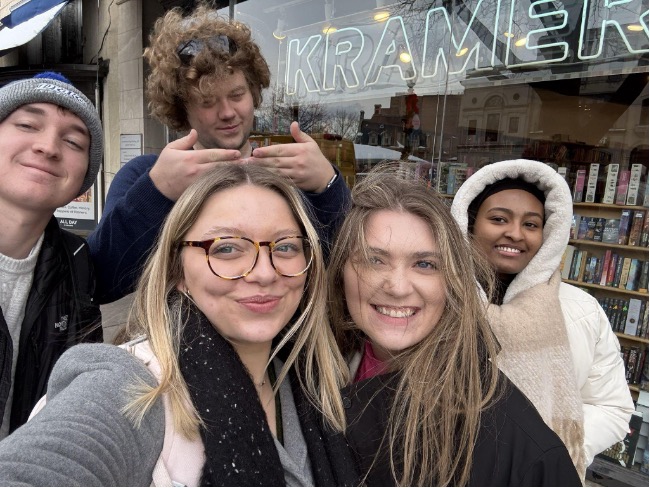
Later on in our adventures, we walked to a popular D.C. bookstore, Kramers. While pursuing the well-stocked shelves in Dupont Circle, we spoke to several D.C. residents about topics ranging from the upcoming inauguration to policy impacts in the next couple of years under President Trump. The cozy interior of the store served as a welcoming contrast to the cold, snowy streets. The warmly dressed clientele seemed individually enveloped in their books, making approaching them to ask questions intimidating at first. Eventually, we noticed a man in a Yukon cap who was flipping through a book on modern conservatism. Bingo.
The man introduced himself to us as Bill. To get our foot in the door, we explained that we were college students doing a project on the perspectives of D.C. residents ahead of the inauguration. As we studied his reactions, trying to gauge his interest in conversing with us. During the conversation, his expression never changed, and he never looked up from the book, which he had idly flipped to an empty page at the end. Regardless of his apparent lack of interest, he answered all of my questions. We led off by asking if he was a D.C. resident, to which he replied that he was. We had found the right person to speak to.
We asked him if his everyday life had changed at all recently due to the upcoming inauguration. The goal of the question was to see if everyday life had begun to shift as masses of people began to visit and witness the swearing-in of a new president, to which he replied that he had not noticed any changes thus far. We asked him if he planned to stay home for the date of the inauguration, to see if the largely democratic population planned on staying during the flux of Trump supporters visiting the district, and also if he planned on attending any events around the inauguration. He stated that he did not plan on leaving, but did not plan on attending. We asked one more question, to state any policy expectations in the dawn of the Trump administration on D.C. residents. He responded that he was generally concerned about the effects of conservative policies being implemented through the Republican majority in the house, as well as having Trump as the chief executive. He did not express any specific concerns for the local effects of these policies, however.
Despite not being super detailed, we felt that we understood a fair amount from our conversation with Bill. He did not wish to go into detail about his concerts, only that he had them. We felt that this may reflect a significant change in the attitude of the highly politically active populace of D.C. to one that is more tuned out, pessimistic, and generalized. Only time will tell if this continues after Trump takes office, or if it will shift to one that is more activist and antithetical to the Trump agenda.
We then approached an older gentleman, standing near a bookshelf, actively reading a book. We asked for his views on the current and past inaugurations, and how it has affected his life as a D.C. resident. The gentleman expressed how D.C. has been home for him since 1988, and has attended every inauguration since, regardless if his personal political views oppose the president being elected. However, for the upcoming inauguration he has decided to not attend for the first time. His disappointment of the most recent election has moved him to the point of absence, almost as a personal act of protest. The gentlemen also expressed his distaste for the President elect, predicting that the length of the presidency will last around 6 to 9 months, before the government begins to decline. I asked the gentlemen if he will be staying in D.C. for the inauguration, as some people will be leaving their homes for the day. Even with the new presidency, the gentleman has decided he will stay in D.C., as he feels the most safe in his city, and does not feel like he will be in harm’s way with the extra security during this time. D.C. has been his home for 30 years and will always stay connected with the city regardless!
Finally, we approached a young woman who worked at the bookstore. The moment we mentioned the upcoming inauguration you could sense her apprehension. She admitted that her original plan was to flee the city. She feared the potential for violence, chaos, and political violence. But as a college student, she didn’t have the flexibility in order to make that happen. Talking with Elizabeth felt like speaking with someone going through the stages of grief. She admitted she was in a stage of denial. Trying to ignore the news, the Hill, and most definitely the reality of the 20th of January. She’s lucky enough to be able to walk to work so her commute wasn’t affected however her work life is. As the inauguration comes closer she has noticed the bookstore has gotten busier and more chaotic, a trend she only anticipates to get worse.
As the city braces for the inauguration, it’s clear that this moment is not just about a political transition but also about how D.C. residents choose to navigate and respond to it. Although hundreds of thousands people live in D.C., their worlds don’t revolve around politics as much as we assume they do. This disconnect between perception and reality reveals a deeper truth: D.C. is not just the nation’s capital but a place where people live, work, and build community.
 Drake in DC