
People of the Supreme Court
By Alan Fox
The Supreme Court of the United States is more than just nine Justices clad in black robes. It is a whole operation that ranges from the security/police officers outside and inside. There are the cafeteria staff, janitors, clerks, Marshal of the Court and more. People from all around wait outside the Court for hours just to maybe have the possibility of hearing oral arguments.
Hearing arguments in January is quite uncommon. The Justices were already in town due to the death of former President Jimmy Carter and there was an expedited hearing for the TikTok case. This caused the well-oiled machine that is the Supreme Court staff to work in order to get the Court ready for the case. The Justices scheduling an argument in January doesn’t just affect the nine Justices, it affects everyone. This includes our class who had the opportunity to stand outside the Court not once, but twice.
The Police
The Supreme Court has its own police, the Supreme Court Police, led by the Marshal of the Court. These officers stand outside in the cold keeping all of us safe. They are also the ones who hand out admission tickets. Since the same officer was handing out tickets Friday and Tuesday, maybe she recognized our group as being determined? The officers manning both checkpoints are stern but respectful. They treat you well, but you are reminded of the institution that you are in. These are people with jobs to do. If they fail and a recording or photos of the Court in session get out, it will be a major breach of longstanding Court tradition.
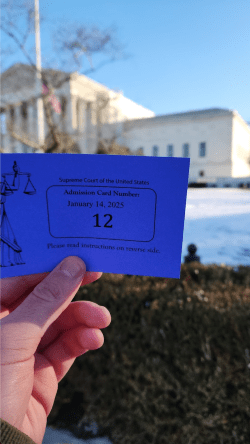
The coveted ticket with the Supreme Court in the background. The ticket is just a formality as when you get inside, the number doesn’t matter, only that you have a ticket. Photo and caption by Alan Fox.
After arguments ended and the whole class was inside the Court to tour it, I spoke with a security guard. He recognized me from the checkpoint earlier in the day. We had a brief conversation about D.C. and how he’s a local in the area. The officer also shared how much he enjoyed Chicago, my hometown, when asking where I was from. While normally not used to working in January or in this cold, the Supreme Court Police seemed less affected by the cold than those of us in line. The Marshal is responsible for overseeing the building, providing security for the Court, its visitors, and the Justices.
The most iconic yet unknown role of the Marshal is the cry. It starts off with “Oyez, Oyez, Oyez.” There is also the clerk who administers the oath and deals with bar admissions. The Clerk was busy on the day we visited as there were numerous Supreme Court bar admissions before arguments began.
The Justices
The Justices are normal people. Compared to what is seen in the media, they are all friendly towards one another. To everyone else but them, the Court is a place of mystery, wonder, or where their future is decided. To the Justices, it’s just work. Our class had the treat of hearing Justice Clarence Thomas ask questions. He even once went 10 years without asking a question. While they may disagree ideologically, the Justices are friends with each other.
Justice Neil Gorsuch talked with his neighbor, Justice Sonia Sotomayor, on numerous occasions. Justice Gorsuch also talked with Justice Amy Coney Barrett. Justice Thomas, the quiet one, even laughed at a joke during the second case of the day. Justices Thomas and Samuel Alito are quite the recliners. The Court has this perception of mystery and strictness but there’s Justice Alito asking lawyers a question while occasionally staring into the ceiling. During a Supreme Court Bar admission, a motioning attorney forgot to say that the attorneys being admitted were qualified to be members of the Bar. It led to a light-hearted moment with Chief Justice John Roberts, who even had a smile on his face.
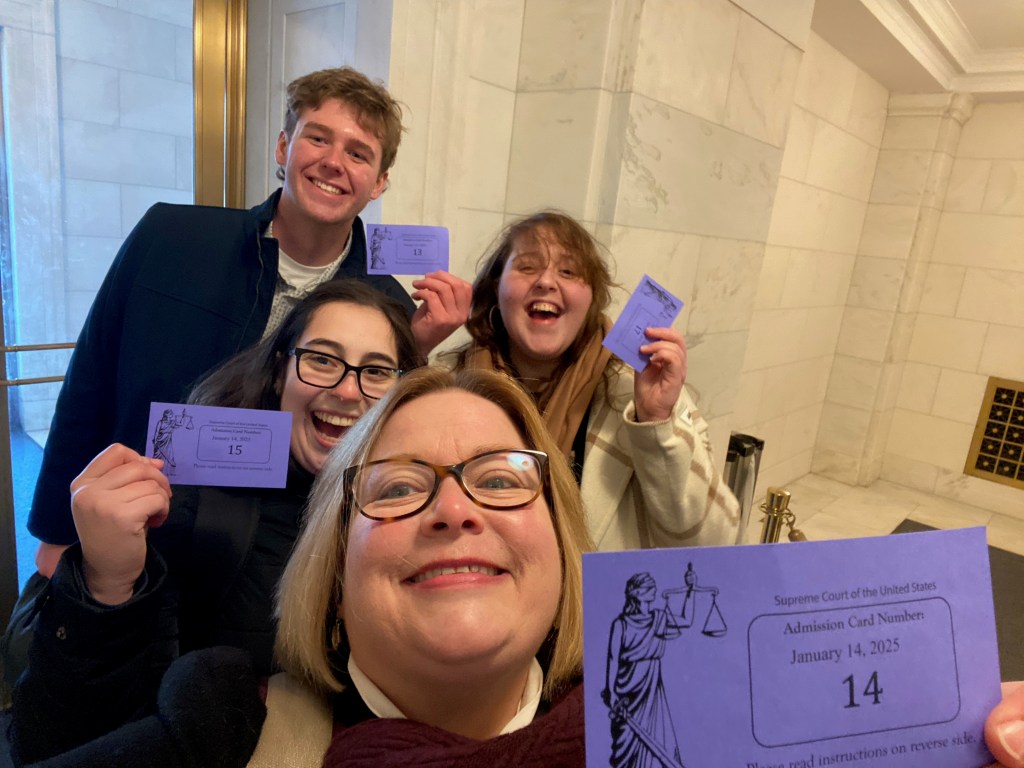
A picture of a few of the cold viewers right after entering the Court. From front to back, Prof. Rachel Paine Caufield, Hannah Goldsmith, Fran Conner, Eli Benson. Photo by Rachel Paine Caufield and caption by Eli Benson
Court Staff and the Line
Waiting outside in line is the only way for the public to witness arguments. After a failure, some decided to skip the wait and the cold, but our class was determined. The people in line have interesting stories and backgrounds.
Mitch Davis talked with some folks from his home state of Colorado. The couple behind our class was there
supporting an attorney who was arguing his first ever case before the Court in “Thompson v. US.” Our professor, RPC, “drew near and gave her attention” to every dog that came by. I spoke with people who drove a few days to show their support for a Texas law being heard the next day.
People from all walks of life will show up outside the Supreme Court in the morning to hopefully hear a case. It’s fascinating how waiting in line for the opportunity to hear a case brings so many people together. During our failed attempt to hear the TikTok case, a woman provided coffee to help warm up others after her group got inside. Without the unsung heroes of the Court, the custodial staff, the food service, the ushers, the operation would not be as smooth as we had experienced.
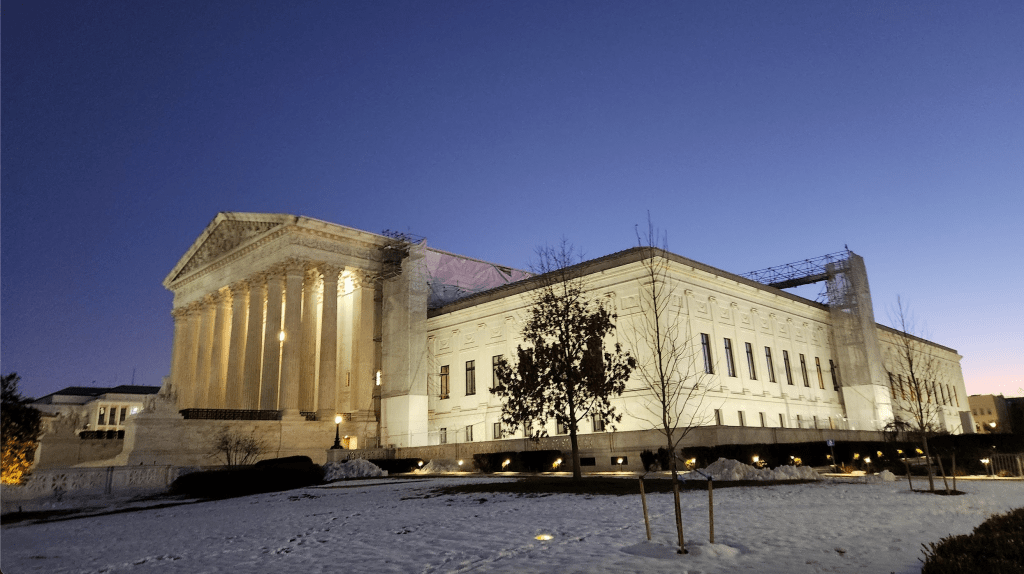
The Supreme Court lit up at 6:50 A.M with the sunrise slowly starting to set in behind it. Photo and caption by Alan Fox.
Women in Conflicting Conversations: What We Can Learn From the Women in the Senate
By Amanda Favazza
I ask a lot of questions. As a journalism student, I plan to make a career out of being curious. After writing and asking a lot of questions in my work and on this trip, I began to notice how women and men phrase their questions differently. Men are, usually, more blunt while their female counterparts often preface their questions with apologies and unnecessary context. The linked video is a lecture by linguistics professor, Deborah Tannen.
Without getting into the psychological weeds, why do women, including myself, have such a difficult time simply getting to the point? And what can everyone take away from senators’ ability to poke and prod without remorse?
Sorry, I Have This Little Pet Peeve
A majority of this trip has revolved around asking questions, either to our peers or to the field professionals we’ve been meeting with. In short, I’ve listened to a plethora of questions. From those listening sessions, and a confirmation hearing on Wednesday, January 15, I’ve found new pet peeves during inquiries such as starting with apologies: “Sorry if you’ve already said this,” degrading oneself, “I don’t know if this is a dumb question,” and rambling context and reasoning before asking a question.
Granted, I catch myself doing all three of those so it’s easier said than done. Whether it’s coincidence or science, I’ve observed more women doing those habits listed above. Yet, I found that the female Senators during Pam Bondi’s confirmation hearing didn’t do any of the listed habits. Instead, they, like Senator Amy Klobuchar, got right to the point. They asked the questions that everyone wanted to know and didn’t beat around any shrubbery to get there. When giving context, they were concise and used direct quotes. While these women are on a national stage, we can take their power and precision as inspiration for our own work. During Pete Hegseth’s confirmation hearing on Tuesday, January 14, Senator Tammy Duckworth, had a ruthless line of questioning to the Secretary of Defense nominee. And yet, it never got out of line. It was professionalism exemplified.
Pam Bondi taking an oath before the Judiciary Committee during her confirmation hearing to be the 87th Attorney General.
Photo and caption by Amanda Favazza.
A Controversial Point
Asking questions about someone’s hometown — simple and partisan. Prodding someone about the 2020 election — touchy and controversial. Senator’s aren’t asking future Attorney Generals and Secretaries of Defense about their high school state championships, they’re asking about their qualifications to serve and protect the United States of America. I don’t often sweat small talk, but confrontation, specifically in the political sphere can make anyone nervous and crack confidence.
Screaming, crying, and shutting down are not productive ways of coping with strong emotions yet they can feel easier than being graceful.
As a woman, I feel that young women aren’t educated enough on navigating controversial and conversations with conflict. Instead, we observe our older female counterparts pleasing the speaker and avoiding disagreement entirely. This narrative doesn’t serve us well in the professional world. Sitting back when curious and passionate to avoid a clash isn’t effective and sets a precedent for other women to stay quiet, although their question might be the one everyone wants to hear.
When Bondi’s hearing went into recess for lunch, I had a thoughtful conversation with one of our professors on this trip, Rachel Paine Caufield (RPC). She was admiring the interrogation skills and conviction of the women in the room, including Bondi. Not only were they able to ask questions with confidence but keep their composure during fiery lines of questioning. RPC recounted how she looked to women in office as models of proper attitude, finding that they don’t show their rage and stay engaged in the conversation, no matter how infuriating a situation may be.
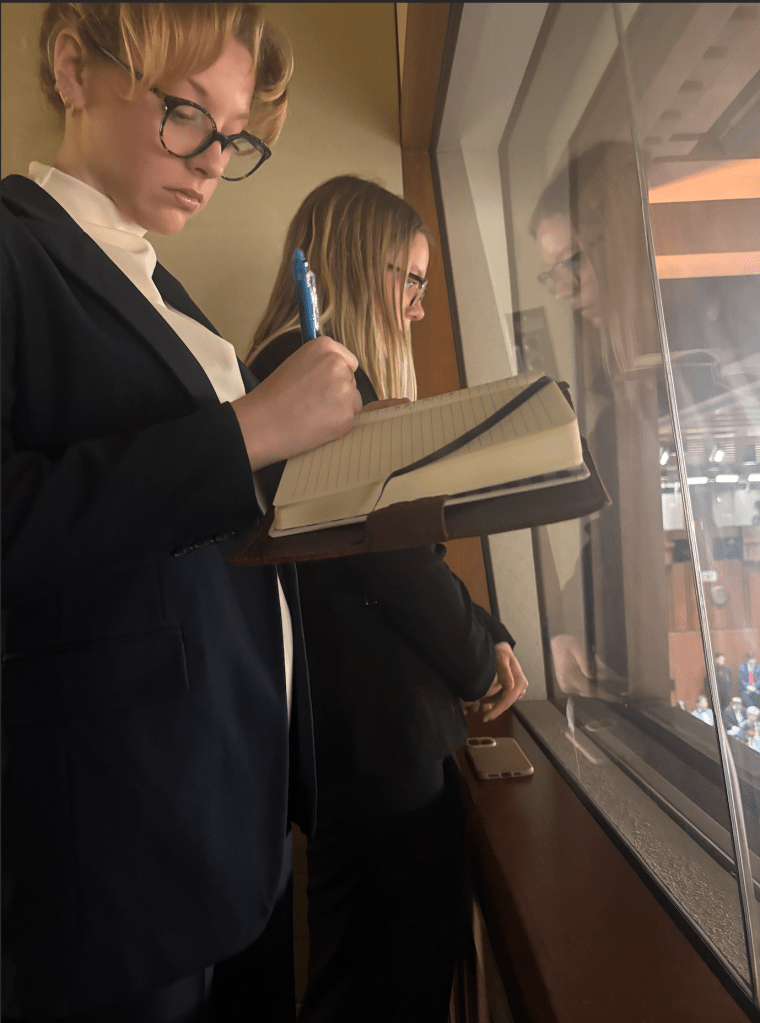
Group member Amanda F. and peer aya H. taking notes and observing Pam Bondi’s hearing. Photo taken by Liv S.
I’m Speaking
Senators represent their state, their party, and lastly themselves. They represent entities larger than themselves, making their values less personal and more for the good of who they serve. It gives them a bit of a curtain to hide behind because while their questions during hearings like this are targeted and partisan, it’s their job. These are people who are doing their civic duty and engaging in an intensive job interview during these confirmation hearings. They’re interviewing the people that will lead the country for the foreseeable future. With time limits, they hold themselves accountable for speaking over their limit, are concise to adhere to that limit, and remain calm despite frustrations in answers, or non-answers in some cases.
That’s what we have to learn from senators, male or female: accountability, conciseness, and keeping calm.
The Politics of Nostalgia
By Eli Benson
It is a bit of an open secret in Washington D.C. that “Make America Great Again” is not an entirely original Trump term. The Trump team potentially pulled inspiration from former President Ronald Reagan and his campaign slogan, “Make America Great Again.” See the similarities?
It is not uncommon for politicians to take inspiration from those that came before them in their campaign slogans, nor is it uncommon for political parties to base their messaging off of years past. Politics and the city it calls home, Washington D.C. are inherently nostalgic. Throughout our trip to the city, we viewed monuments to our past and listened to political actors and pundits alike speak about tradition and custom. Everything from memorial pamphlets to inauguration tickets are headed with gothic, nostalgic fonts.
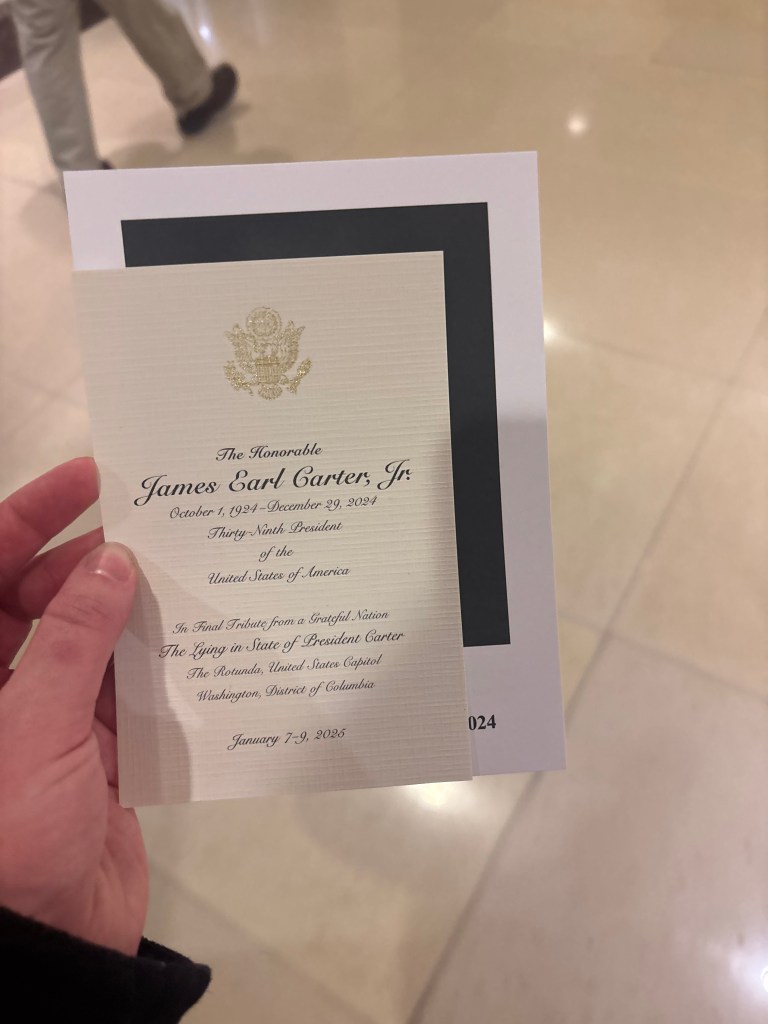
Photo of paper received at former President Jimmy Carter’s memorial at the Capitol Rotunda. Photo by Liv Swaney and caption by Eli Benson
The air of the city is filled with nostalgia and its inhabitants breathe it like oxygen. Despite its prominence and infusion into everything D.C., it can potentially be the secret ingredient to understanding the special sauce that have made Republicans so successful in recent years.
Back to the Future is Getting Personal
Nostalgia is uniquely personal, holding a different meaning for each individual who might hear a phrase invoking the feeling. When hearing “Make America Great Again,” it is not unreasonable to ask, “When was America great?” That question in itself can bring a person to a plethora of different eras, a relatively simple explanation for the rapidly expanding MAGA coalition. It could mean a return to the 80s for older generations who found financial success and resonated with a more conservative social environment. It could mean a return to pre-recession America where home prices were low and jobs abundant. It could even mean a return to pre-pandemic America devoid of now mainstream social topics and cancel culture some might find to be too far out there, or personally offensive. But that’s the beauty of the slogan — it can mean so many different things. Even though it is just four words, it can connect with every voter.
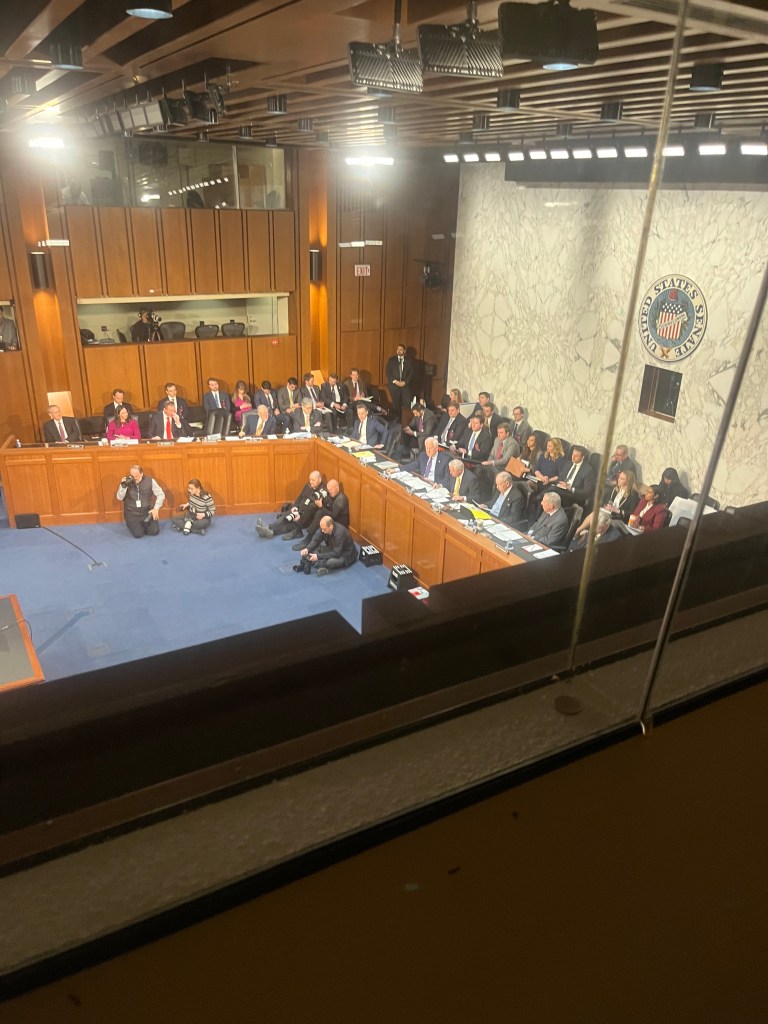
Even Senators in the Senate Judiciary Committee hearing for Attorney General nominee Pam Bondi had differentiating opinions regarding the nostalgia of times past, a hearing our group had the opportunity to watch first-hand. Senator and Judiciary Committee Chairman Chuck Grassley (R-IA) made mention in his opening statement of a “storied law enforcement” history that the Justice Department (DOJ) holds and his wish that Bondi would return the DOJ to that ideal. Senator Eric Schmitt (R-MO) made similar mention of an intention to “restore trust” in the DOJ. When the DOJ held the trust of the public in the eyes of Sen. Schmitt is unknown, but that is the beauty of the statement, it could be anytime previous to now.
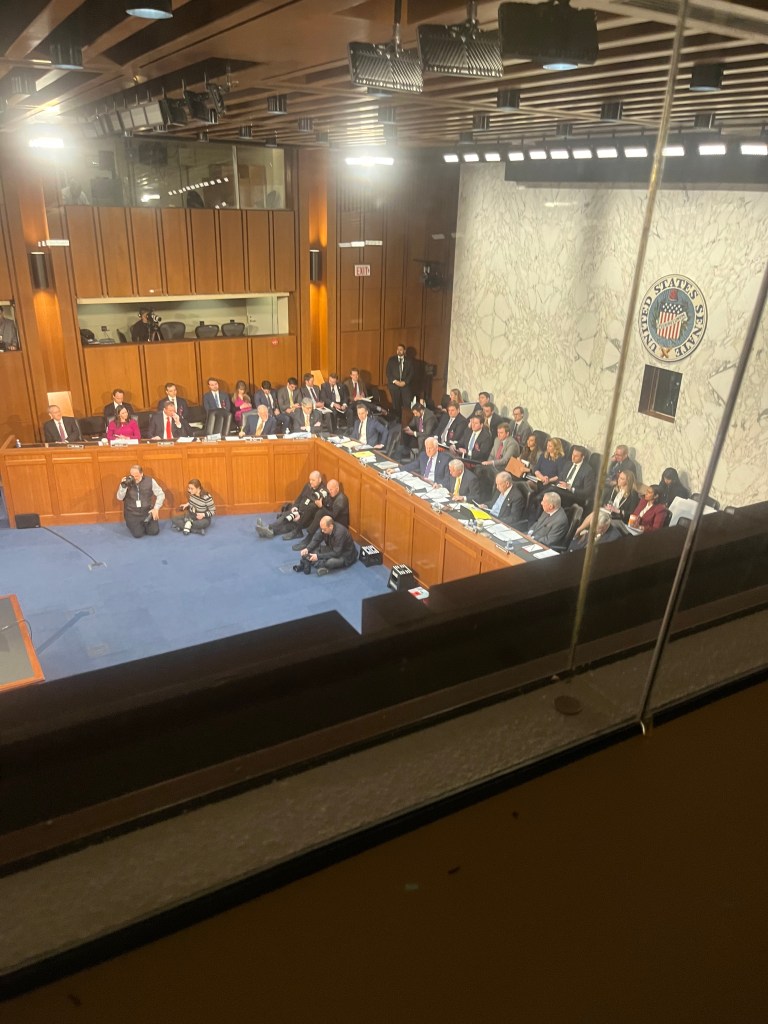
Our view of the Senate Judiciary Hearing. Photo and caption by Eli Benson
Bondi herself made similar statements, consistently answering questions by including the tagline “Make America Safe Again.” As with Sen. Schmitt, it is not clear when America was or was not safe, but Bondi’s messaging will certainly resonate with Americans that have felt safer in years past. The use of nostalgia is not limited to Republicans, Ranking Member of the Senate Judiciary Committee, Senator Dick Durbin, a Democrat from Illinois invoked similar feelings as he detailed a rich history within the DOJ, history that may hold nostalgic feelings for him and his Democratic base, but for others, that same history might not be as rich.
Making Sense of the Timeline
So what does all of this mean? It could very well mean nothing. It is not abnormal for politicians to use nostalgia and co-opt ideas of historical figures to further their present agenda, especially when the figures of the past might be more popular than those of the present. But, it still provides an insight into where the parties are moving in their messaging. Republicans have become the leading experts in the field of political nostalgia and there are certain facets that when present, nostalgia becomes a particularly potent feature. Rapid change, unsettling times, uncertainty and conditions that lead to anxiety all work in favor of political nostalgia. It is no secret that America is well within an anxiety inducing time. Thus, a reminder of a time in the distant past where the problems of today either did not exist or were not at the danger level they are today is a compelling argument to make.
In conclusion, it is not bad, immoral or ignorant to be excited by the politics of nostalgia. It is instead quite normal. Nostalgia has been used time and time again throughout history, by both parties, on every topic under the sun. Nevertheless, it is important to understand the nostalgic feelings pushed forward by our political leaders and the effects their words might have on our own political understandings. Next time a speech is given, an article is written or some other form of communication is provided and you catch yourself feeling nostalgic and wishing for a time where the challenges of life seemed minimal, be reminded that it is an intentional choice. The author, speaker or whoever is hoping for those feelings to be invoked presented their information that way on purpose. They intended to make you feel the way you are. Even though that might sound sinister, it may not be. Nostalgia politics are neither good nor bad, but they are potent and certainly a portion of political messaging consumers are to be aware of.
Memorials and Meaning
By Pat McCabe
I’m having an incredibly great time in DC! My current trip here with Drake University is serving as an invaluable opportunity to expand my understanding of the way government functions. However, as I walk through this beautiful city, my mind cannot ignore an ugly underbelly of forgotten Americans which engulf and surround it. In the City of Washington, license plates contain the tagline “end taxation without representation” – as the residents of this city do not have direct representation in the United States Congress.
Even further disenfranchised are the thousands of homeless residents simply trying to survive in miserable, frigid winter conditions. According to an alumnus that our group spoke with, visitors to the United States from developing nations are shocked and bewildered at the way our nation treats its homeless population. I do not see reactions to homelessness in America improving in the future, as the Supreme Court’s decision in Grants Pass v. Johnson enables ordinances that prohibit people from sleeping outside. This doesn’t even begin to encompass the number of Americans who have been grossly disenfranchised throughout history.
Last week, our group was able to take a night-time tour of the national mall and its surrounding monuments.
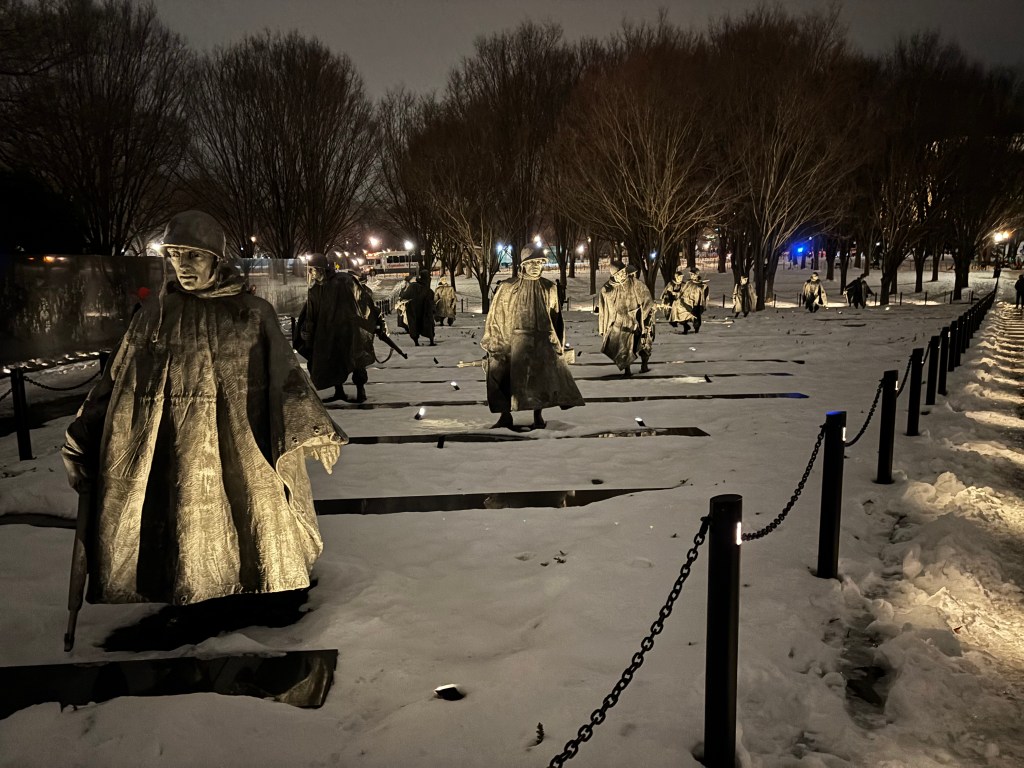
The statues at the Korean War Memorial were among the monuments on the tour.
The last stop on our tour was the Marines War Memorial, portraying the famous flag raising on Iwo Jima. Six men raised the American flag above Mount Suribachi during that battle; three of those men were later killed on the island. The stories of two men, Ira Hayes and Michael Strank, stood out to me in particular. Our tour guide informed us that Michael Strank was a Czechoslovakian born man who applied for American citizenship in the late 1930s. Some time after doing so, he enlisted in the United States Marine Corps. Strank was among the three killed after the famous flag raising. According to the Marine Corps Times, Strank did not receive official documentation of citizenship before the time of his death – meaning that Strank died defending a country that did not fully consider him to be a citizen.
Among the three men that survived was Ira Hayes, a Pima Indian. After the end of the Second World War, Hayes hitchhiked and walked thousands of miles to meet wartime friends that had survived, while paying condolences to the families of those that had fallen. When reuniting with a friend by the name of John Thurman, Hayes faced discrimination based on his race. According to Thurman’s account, his mother would not let Ira Hayes inside of her house on account of her “not liking Indians.” It is reasonable to assume that this is not the only case of discrimination faced by Hayes, before or after the war. Ira struggled heavily with alcoholism and was presumed to have had post-traumatic stress disorder. Such afflictions eventually led to his untimely death at the age of 32.
In hearing Strank and Hayes’ stories at the memorial, I was filled with both tremendous gratitude and grief. I am two generations away from two grandfathers who served in the military. One was a cook in the Army. The other – who I referred to as Opa – served with the Marines in the Battle of Okinawa and the Army during the Korean War. Opa’s service in the military was not glamorous. In his account of Okinawa, he accounts half of his platoon being either killed or wounded. In this particular instance, Opa remained unscathed by what he referred to as the “grace of God.”
While I am not a religious person, I similarly recognize that I have what I do today through extraordinary circumstances. Opa was able to attend college and become an engineer in his post war life due to the benefits of the GI Bill. I am living out the long-term effects of those benefits through a combination of generational wealth and what Opa has left in my name today. Under different circumstances, I may not be attending college, nor enjoying an incredibly privileged, comfortable life.
The stories of others hardship constantly remind me to be grateful for everything that I have today. Consequently, memorials and monuments serve as a stark reminder of how our country got where it is today. They should not however, serve to glamorize or romanticize historical events or figures. Memorials and monuments should rather share a message that societal progress is a constant battle. Nothing that you or I have should ever be taken for granted. In recognizing the sacrifices of others, I hope that other Americans are able to recognize what they can sacrifice for others themselves.
Pat McCabe is a senior from Chicago, IL studying political science and economics. He is interested in learning about how government and community organizations can better serve politically marginalized and disenfranchised groups.
A City Built with a Plan
By: Michael Mitchell and Cassie Contreras-Franco
As we have traveled through Washington D.C. as a class, our goal has always been to immerse ourselves fully into the culture of the district. One of the starkest differences and arguably one of the most visible differences between Washington D.C. and Des Moines is the public transportation system. In Des Moines, we have the Des Moines Area Regional Transit Authority (DART) which offers bus and other pick up services to residents in Des Moines and some surrounding cities and counties. However, in recent years funding has suffered and services have been cut.
Compare that to Washington D.C. where we have seen a city that prioritizes public transportation with a populous that utilizes it. This system is called the Metro. It has multiple subway lines and bus routes. We have had the opportunity to use both of these services. Instead of driving to our destinations, we use a public service that is convenient and easy to utilize. Of course, it took some getting used to, but it has also been a great experience for all of us.
This system provides residents and tourists with easy access to many parts of the district. While some areas don’t have full access to the Metro system like others, it is still much more accessible than the public transportation system in Des Moines. The Metro is connecting people and cultures, giving them access to new opportunities and experiences. It has always brought us from point A to point B safely, and that is all we can ask for.
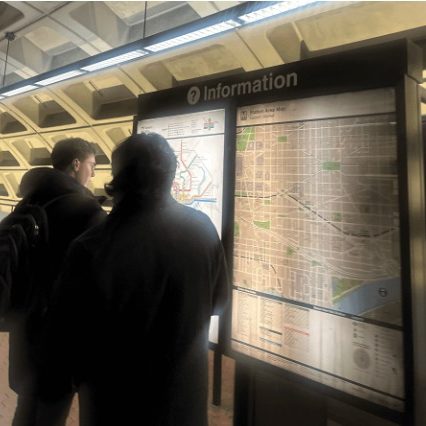
Reaching most, but not all
The Washington D.C. Metro system is composed of various bus and subway routes. However, as we have met different alumni and others living and working in the district, we have heard that the neighborhood of Georgetown does not have a subway stop. This neighborhood is a more affluent neighborhood in the district and is home to Georgetown University. One of the reasons we heard as a group as to why this neighborhood in the district did not have a subway station was because when this transit system was established and as it has been updated and added on, people in that area of the district did not want others from poorer neighborhoods to have easy access to their neighborhood. This was disheartening to hear because we have witnessed the beautiful mix of cultures and people and that has brought us so much joy.
Connecting People to Culture
In the district our class has been exploring, is it identifiable how many of the people here rely on the public transit system. Whether they are tourists, on their way to work, or exploring all the different options D.C. offers, the Metro can take you to a wide range of locations. One of the ways this system connects people to the culture of the city is through the easy access it provides to people and the district’s historical monuments and museums. When a group of us Drake University students decided to go to the United States Holocaust Memorial Museum, we walked to use the Metro and knew to get off at the “Smithsonian” stop. It was shocking to experience this as someone who was raised in Des Moines, Iowa. We got the ability to have access to a variety of different museums just a few subway or bus stops away. In the proximity of a mile, there are almost 10 museums one person could visit, and gave us the opportunity to learn about diverse cultures and history. By using the public transportation system, you have the chance to learn about African American history, Natural History, Air and Space, and an abundance of more topics. If other places in our country had a system such as the D.C metro, connecting with people would become far more accessible.
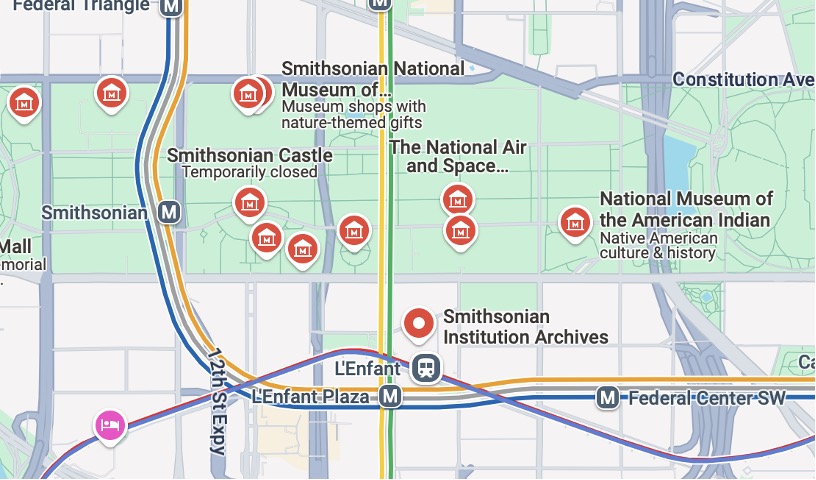
Not only can people in this district learn about the history of the people who walk their streets everyday, they can also learn about their culture through food. D.C and its culinary scene has been one our group has been more than interested in exploring. While during one of our assignments where we explored the area and different neighborhoods without using our phones to familiarize ourselves with the public transit system, we stepped out of the metro and found many different places to have a meal. During our week here so far, we have tried pupusas in the eastern market area, and rice noodles in chinatown. Overall the metro system provides a convenient and efficient way to help people emerge themselves into different cultures.
A final thought
Using public transportation has been an eye opening experience. We have seen so many people of different walks of life as we have traveled the district and we know it is the people who bring the best to Washington D.C. So, we have enjoyed being able to reach so many people and cultures through this trip and specifically the Metro system.
Michael Mitchell, Strategic Political Communications and Philosophy, Spring 2025 LinkedIn
Cassie Contreras-Franco, Law/Politics/Society and History, Spring 2026
Government and Religion
By: Mitch Davis
This Sunday morning, I went with a small group to attend a service at the National Cathedral. It is a beautiful structure. From the outside, one sees the cathedral’s stone towers reaching for the sky. Inside, the architecture immerses each person. One is lit by sunlight shining through intricate stained-glass windows and dwarfed by the building’s soaring ceiling. Eyes are drawn upward, towards a spectacle of uncommon beauty.
While this place is known as the National Cathedral, it is not funded or operated by the U.S. government. It can’t be; the First Amendment prohibits an establishment of religion. Yet to say that there can be no official religion in the United States is not to say that the government cannot touch religion at all.
Symbolism in our political institutions
Throughout Washington, D.C. there is evidence of the influence of religion on the U.S. government and political philosophy. Just a few days ago, former president Jimmy Carter’s funeral was hosted at the National Cathedral. Across Pennsylvania Avenue from the White House, St. John’s has a pew where presidents traditionally worship. When Donald Trump is sworn in as president on January 20, he will take the oath of office with one hand on a Bible. In the United States House of Representatives, the walls are decorated with images of history’s most notable lawgivers. These figures include Hammurabi and Napoleon (although not, to RPC’s chagrin, James Madison); but the figure in the center, with his gaze focused directly on the Speaker’s chair, is Moses.
I could continue. Engraved on the wall at the Lincoln Memorial is a passage from the Book of Matthew, which Lincoln quoted in his second inaugural address. West of Lincoln, across the tidewater pool, is the memorial to Dr. Martin Luther King Jr., whose doctorate was in theology. The relief sculpture depicts Dr. King holding the same scroll that Thomas Jefferson holds at the Jefferson Memorial: The Declaration of Independence, which holds “that all men are created equal, that they are endowed by their Creator with certain unalienable Rights.”
Religion and landscape
The prominence of Abrahamic mythology in D.C.’s physical landscape reflects its prominence in the United States’ philosophical landscape. The great tree of American political culture has many roots, and Abrahamic theology is one of the deepest. Judaism and later Christianity were among the first to emphasize the equality of all people before God. The idea of divine law underpinned Locke’s social contract philosophy, which inspired the American Founders. Intra-Christian strife drove sects such as the Pilgrims, the Puritans, and the Quakers to British North America, where the diversity of arrivals encouraged the development of tolerance and the separation of church and state.
Many American founders and leaders have understood faith as an important component of a healthy republic. Calvin Coolidge said that “In its main features the Declaration of Independence is a great spiritual document. … Equality, liberty, popular sovereignty, the rights of man – these are not elements which we can see and touch. They are ideals. They have their source and their roots in the religious convictions.” Long before Coolidge, John Adams wrote that “Our Constitution was made only for a moral and religious People. It is wholly inadequate to the government of any other.”
Significance
What, then, is the significance of religion to the U.S. government today? I anticipate some readers’ reaction, which is to be skeptical of any association at all between religion and government. This skepticism is warranted, not because religion as such is pernicious, but because history shows the dangers of marrying the zeal of religion to the force of the state. The solution, however, is not to chase religion out of the public square entirely. It is to do roughly what we are now doing: to allow religion to exist in the private lives of people who perform public duties.
If First Not Succeed, Try, Try. Try..Try…Again.
By: Miguel Abellan and Fran Conner
On this trip we learned the valuable lessons of persistence, patience, and triumph… the hard way. When going to sleep on Tuesday night we were excited to visit and tour the Supreme Court. The Supreme Court is such a significant part of law and justice for the United States, and we were so excited to be in the presence of such power. Leaving the hotel at 10 a.m. we embarked on our trek through the cold snowy streets of D.C. First, we got on the Metro to Union Station. The beautiful architecture of the arches left us in awe. Then, we walked two blocks up to the Capitol and the Supreme Court. The wind chill was the worst part of the walk. It felt ten degrees colder with the piercing wind. Surprisingly, the half-mast of the flags did not raise any suspicions for us. As we attempted to pass the railing and climb the steps of the Supreme Court, the Capitol Police stopped us and reminded us about the closure. Suddenly we remembered that all government buildings were closed because of the recent passing of Jimmy Carter. We were sad in the moment but not discouraged. We knew we would be back, hopefully, the next day…
We were not discouraged though, as in the morning a group of us were planning to walk there again for the TikTok ban case that the Supreme Court was hearing bright and early at 6:45am on Thursday. As a –very- tired group of college students commuted to the Supreme Court building, we found ourselves talking first about the case and what to expect, and more importantly, who brought what snacks. Walking from the station to the Supreme court reminded us of the long day we had in store for us; it was below freezing and extremely windy. However, this walk truly meant nothing compared to the three and a half hours of highs and lows to follow. Upon arrival at the Supreme Court, we found that there was a large line, only to see this line was dedicated to those being sworn in as Supreme Court attorneys. Our celebration for their success was short lived when we found out they would enjoy tickets and a warm seat in the Supreme Court before us, as we waited in a long line filled with people who camped out overnight who shared their life experiences and journeys to the Supreme Court. We found that there has been a community built around waiting for these cases. Ultimately, it was their dedication that prompted the sweet reward of being chosen to sit in the Supreme Court in the famous TikTok case. What was equally refreshing was our group’s attitude after being denied entrance due to a lack of tickets, where not only did everyone maintain a positive attitude, but many of us were willing to do it all over again.
(Pictured below: Mitch, Allan, Hannah, and Fran waiting at the Supreme Court)
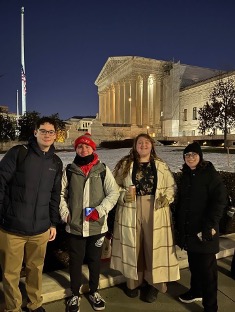
Fast-forward to Monday, as a group we planned to re-visit the Supreme Court again, and thank goodness Professor Caulfield checked the schedule because the Supreme Court was once again closed to the public. However, she let us know that there would be another set of oral arguments in the early morning for two other, less popular cases. We decided to leave even earlier for this argument, this time at 6am. Even though this meant less sleep, it did allow us to get tickets for oral arguments at the Supreme Court that day, and we were finally allowed into the courtroom. Ultimately, we truly believe it was the patience, positive attitude, and determination of the Drake students that pushed them into the opportunity to view two Supreme Court oral argument hearings, similar to those experiences we have found on the hill.
These experiences may have been an inconvenience at the time, but overall taught us strong lessons of persistence and patience, and how it can be applied to future careers. As the saying goes, patience is a virtue. You need to have patience when working on “the hill” and in D.C in general. D.C is a fast-paced competitive city with lots of areas to grow and develop if you’re willing to put in the work. Something we took away from our conversations with legislative staffers, John Altendorf and Skylar Borchardt, is that this city is very much “head down, chin up”. Starting as an entry-level staffer is difficult but with grinding hard and patience, you will see yourself climb up the ranks and see everything pay off. In parallel to the Supreme Court, we saw our success later as we consistently tried to enter the court, persisting until we experienced victory.
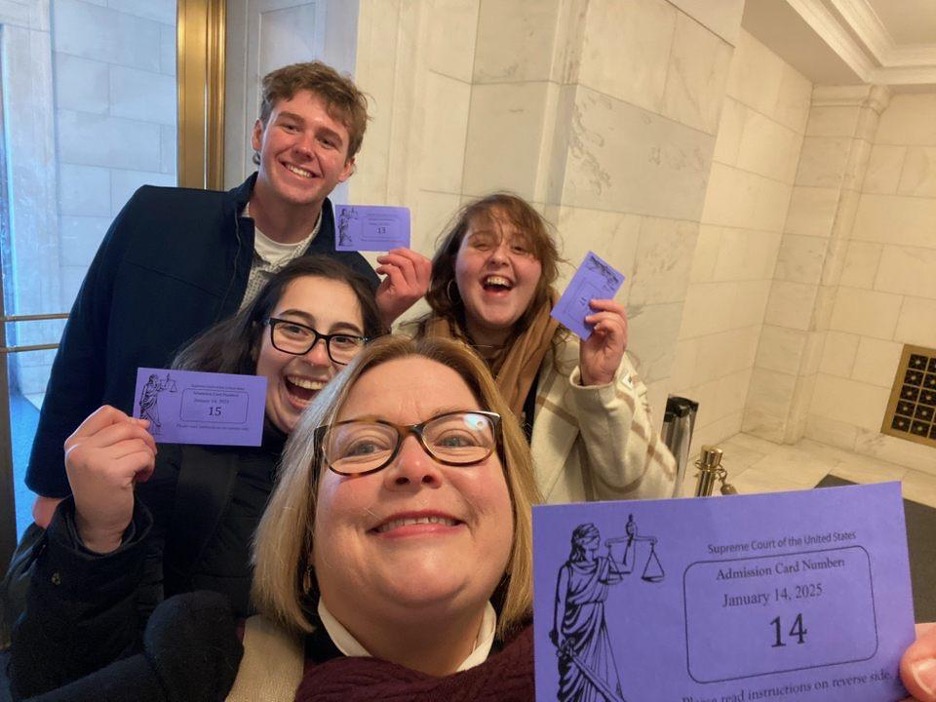
(RPC, Eli, Hannah, and Fran with their Supreme Court tickets…finally!!)
Memorializing the History of Marginalized Groups in D.C.
By Hannah Goldsmith and Eve Loehrer
Two museums that nearly every student in our group expressed interest in going to are the United States Holocaust Memorial Museum and the National Museum of African American History and Culture. These two museums are just a couple of examples of ways that Washington, D.C. remembers and memorializes different identity groups and the harsh realities of their histories.
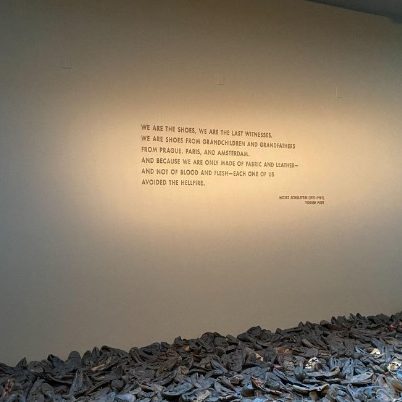
The United States Holocaust Memorial Museum – Hannah
The United States Holocaust Memorial Museum is a very heavy yet incredibly impactful experience. Going into this trip to the Holocaust Museum, I already knew a lot of what to expect. I am Jewish, grew up learning about the Holocaust, and in eighth grade, my Hebrew school class took a trip to Washington, D.C. specifically to visit the Holocaust Museum. We spent around five hours at the museum, and it was the culmination of the past six months of Hebrew school, where we had been studying the Holocaust in great detail. It was easy to get overwhelmed by all of the information, and many of my takeaways from that experience were about the surface-level details of the exhibit.
This time, I found myself drawn to the smaller details of the museum. Although we were there for a slightly shorter amount of time (around three and a half hours), I felt like I was in the exhibit for so much longer. I walked away from this visit to the Holocaust Museum with a deeper understanding of the message of the exhibit. This time, there was less pressure to get something specific out of the museum. I was able to take the amount of time that I wanted to take in each part of the exhibit. This visit allowed me to process the experience in the way that I needed to.
The United States Holocaust Memorial Museum – Eve
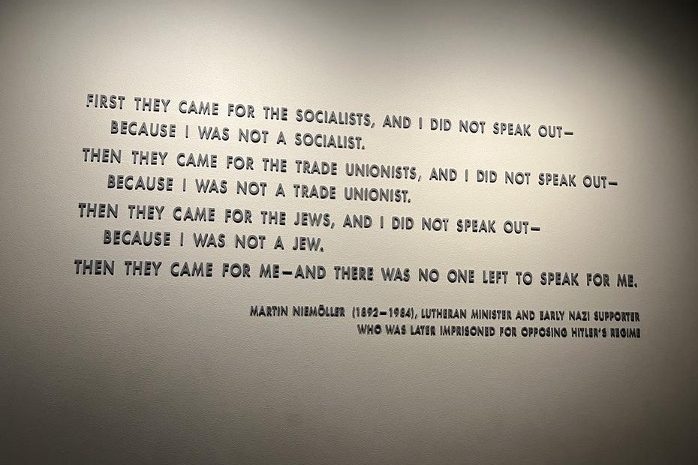
As someone who is not Jewish, I had a different experience at the Holocaust Museum than Hannah. I spent nearly four hours at the museum and was able to read every sign and watch each video all the way through.
My past education about the Holocaust came through history classes and books I read in middle and high school. Although I do believe that my schools did a good job teaching me about the topic, I still received a very age-appropriate account and did not know the extent of the horrors committed during the Holocaust.
In addition to my identity, the way I process intense situations also shaped the way I experienced the exhibit. I tend not to react emotionally during these situations and process everything later. Although this meant that I was able to spend a ton of time looking at everything in the museum, I will need to continue thinking about this experience and process everything I saw in the future to truly appreciate and gain everything I can from this. Learning about the history and experiences of marginalized communities in this country is a continuous process, and I look forward to expanding my perspective by talking to those who are different from me and visiting other museums in D.C. and beyond, including the National Museum of African American History and Culture.
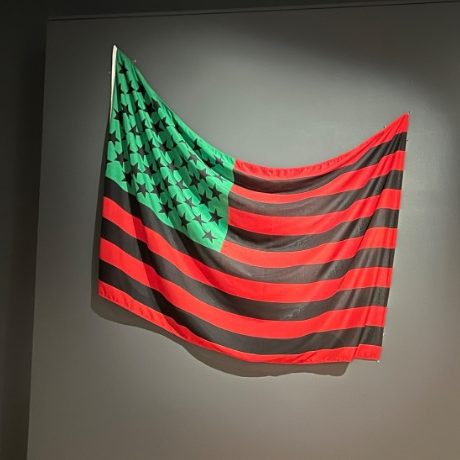
The National Museum of African American History and Culture – Hannah
The African American History Museum was a new experience for me. The museum had some exhibits that were much lighter than the Holocaust Museum, and there were moments in the museum that showcased aspects of African American culture that were very positive. Among these exhibits were a display about African American participation in professional sports, and an exhibit about how African Americans have expressed their culture through their clothes, hair styles, and jewelry. This exhibit also showed how food, craftsmanship, and dance are aspects of African American culture.
At the same time, there were also some exhibits that were very heavy and discussed topics that were at times difficult to process. One of the exhibits that stuck out to me the most was the Emmett Till memorial. This memorial included the casket that originally held Emmett Till’s body. The exhibit talked about how the lynching of Emmett Till reignited the Civil Rights Movement. The thing that I noticed above all else at the memorial, as well as throughout the museum as a whole, is that the exhibits did not shy away from the uncomfortable details of the subjects of slavery, racism, and the violence and oppression that Black people in America have experienced.
Conclusion
With both of my museum visits, I was left thinking about how experiences like these ones are an integral part of the diversity that makes Washington, D.C. so unique. These are not the locations where you take cute photos for social media. They are not the tourist attractions that so many people think of when they think of Washington.
Something that we have talked about during this trip so far is the idea that Washington, D.C. is about more than just politics. It is about people. D.C. is so diverse, there are so many groups of people who come from different backgrounds, cultures, and experiences.
Hannah Goldsmith is a sophomore from Plymouth, MN studying American politics with minors in international relations and psychology, as well as a concentration in women’s and gender studies. They are a fan of the show “The West Wing” and developed their interest in politics from watching it. They are excited to learn more about Washington, D.C. as a political workplace as well as about the community of the district.
Eve Loehrer is a sophomore from Olathe, KS studying journalism and graphic design with a minor in English. Her favorite part of being a journalist is talking to others about their beliefs and experiences, and she’s excited to expand her perspective by talking to her classmates and the people of Washington D.C.
My Grandmother and Vietnam
Author: Erin Nicklas Edited by: Eve Loehrer
The typical recognition ceremonies of Vietnam veterans have never prompted me to think about women. As a preteen, my middle school put on a Veteran’s Day concert every year in which around 100 men would be recognized for their service while I sang the theme songs of all the branches of the military in the choir. I have several relatives who served in Vietnam, all male, including my paternal grandfather. I thought the funeral honors at his service last winter, including the 21-gun salute and the burial flag, were a beautiful way to remember one of the most selfless things my grandfather ever did, and I was thinking about all the men who have served while the trumpet player was performing taps. However, a woman was also central in my thoughts that day: my grandmother, the next-of-kin who received the burial flag and who was overcome with grief.
My grandmother is one of the strongest people I have ever met. Recently described to me as a “tough broad” by another family member, she raised five children (at one point she had four kids four years old and younger) while owning different bars and restaurants throughout the years to make ends meet. She is smart, sarcastic, and not afraid to say exactly what she thinks, and shows her love through actions, not words. I cannot recall ever leaving her home hungry. The day of my grandfather’s funeral is the only time I have ever seen her cry, and that was one of the hardest parts of the loss for me. Both the strength of and the grief felt by women involved with the Vietnam War, whether through a loved one or their own service, largely goes unrecognized. We may passively recognize how terrible it must have been for mothers, wives, and sisters to lose their loved ones, like I recognized how hard it was for my grandmother to lose my grandfather decades after the war, but their own service often goes undiscussed.
The Vietnam Women’s Memorial helped me to realize my own underappreciation of female veterans. Walking past the Veteran’s Memorial with the names of those who died in the war was powerful, but viewing the Women’s Memorial directly after brought tears to my eyes. The sculpture features three women and one wounded soldier. The first woman is supporting the soldier lying across her lap, while the second is looking up to the sky, perhaps for a helicopter, or “in search of help from God” as sculptor Glenna Goodacre put it (source). The third woman is kneeling over an empty helmet, reflecting despair and grief. I found her posture and expression to be particularly compelling and thought that she represented well the trauma the women stationed in Vietnam, serving largely as nurses, would have experienced.
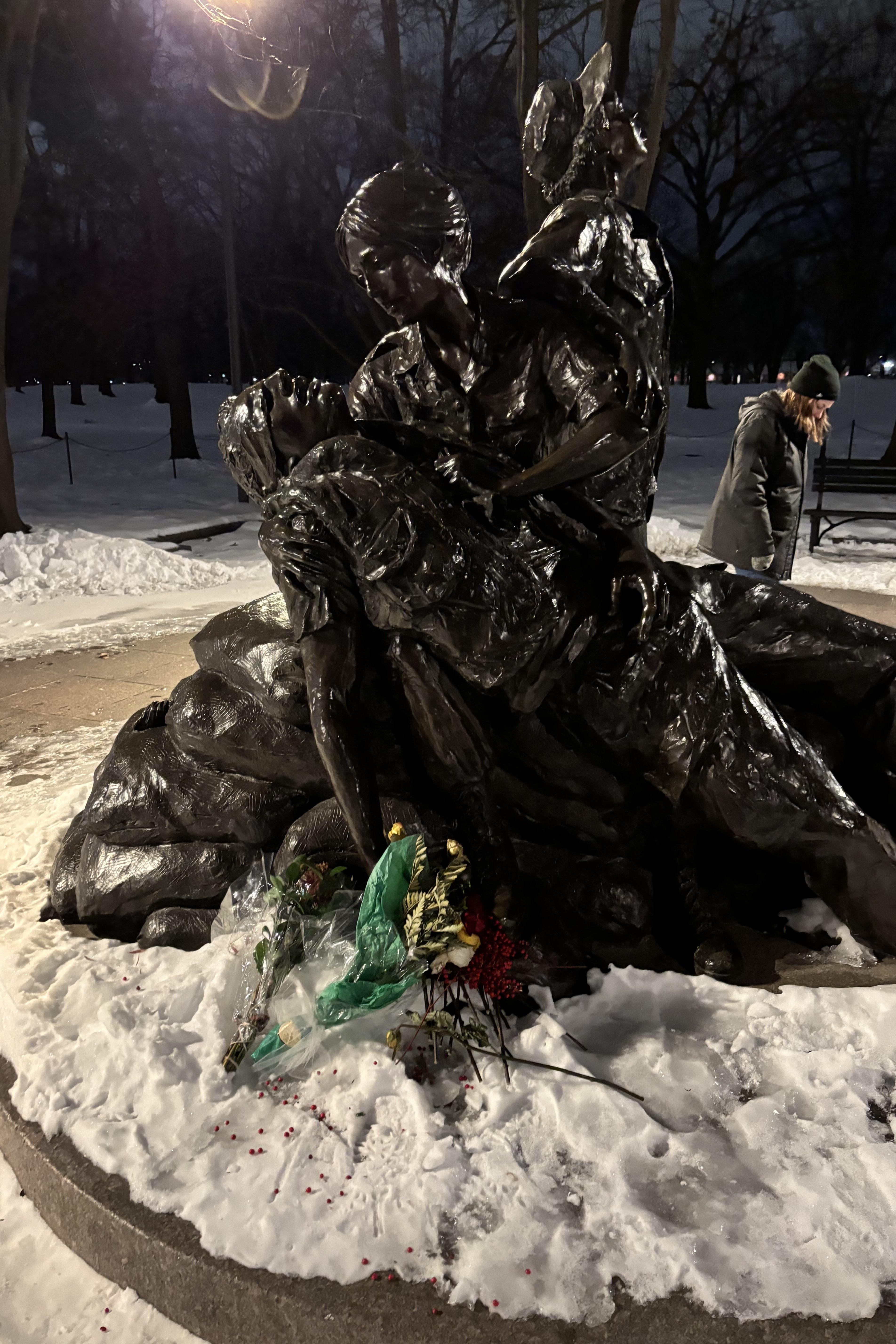
I think we often create memorials to recognize the pain a group of people experienced so that we have a reminder of what they went through and hopefully can use that reminder as a lesson of what we do not want to do in the future. We memorialize Vietnam as a relatively recent and poignant example of the horrors of war and as a way to pay respect to everyone who served in the war. The 10,000 women stationed in Vietnam deserve recognition of the loss and horrors they would have experienced, including some losing their own lives, alongside male Vietnam veterans. Memorializing them is especially important because their role in the war is underappreciated by the general public, just as I did not recognize it until viewing the memorial. Whether connected directly by serving or indirectly through loved ones, women would have experienced similar issues that men faced after the war such as PTSD. We memorialize them in order to acknowledge that their pain deserves to be remembered and felt just like we feel the loss of other Vietnam veterans. The strength of women like my grandmother who support Vietnam veterans or are veterans themselves deserves to be recognized.
Erin Nicklas is a sophomore from Grinnell, IA studying psychology with a minor in politics. She is interested in the intersection between mental health care and our political system, and is excited to discern more about where her interest in politics may lead her in the future during her time in Washington D.C.
 Drake in DC